“The Uncanny Counter” (경이로운 소문)

Well written and terrifically acted, “The Uncanny Counter” is suspenseful and heartwarming. And in a rarity for Korean dramas, there is no second lead syndrome romance to mess with the plot.
Journalist, Author & Syndicated Columnist
Well written and terrifically acted, “The Uncanny Counter” is suspenseful and heartwarming. And in a rarity for Korean dramas, there is no second lead syndrome romance to mess with the plot.
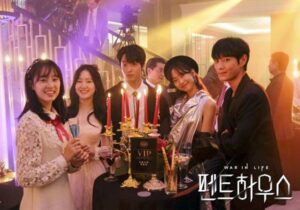
“Penthouse” starts off with the most makjang storyline of the year. This deliciously gripping female-centric series revolves around rival classical singers and includes a (dun dun dun!) switched-at-birth plot twist. Did I mention that one of male characters has a torture chamber in his home, because, why not? Mixed in with the outrageous content is a parable about the haves and the have nots.

“Start-Up” has a second male lead (Kim Seon-ho) who is so charismatic that his storyline often overshadows that of the very handsome lead (Nam Joo-hyuk). Ultimately, the K-Drama reinforces the idea that no matter how broken a family is, the ties remain – for better or worse.

11 Best K-Dramas of 2020: Rivals, Lovers, and Slow Burning Intrigue. These shows are must-watch television. My latest for Teen Vogue.

“Record of Youth” is Park Bo-Gum’s swan song before he enlisted to serve his mandatory military duty in South Korea. While it’s meant to be a traditional love story, the friendship between the three male leads and the woman Park loves was the real draw.
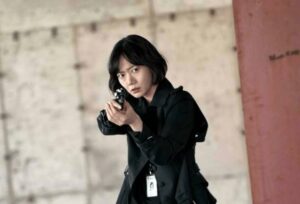
There’s so much lying going on in the second season of “Stranger” that it’s difficult to figure out who’s truth is real. There are so many players convinced that their own criminal acts are for the betterment (cough cough) of Korea’s economy and future that they should be given a pass on their own wrongdoings.
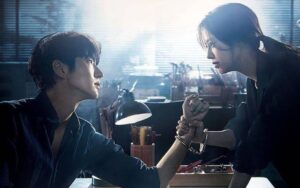
The chemistry between Lee Joon-Gi and Moon Chae-Won is strong in “Flower of Evil.” Viewers never doubt their love for each other. One of the most telling signs of their relationship is that even during times when she isn’t sure who he really is, she never stops referring to him as 자기야 / jagiya, which literally means that he is hers.
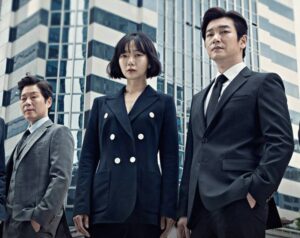
Cho Seung-Woo and Bae Doona are superb portraying a taciturn prosecutor and an intuitive police detective, respectively. He is aloof and shows no emotions. She is thorough and unafraid to go against her superiors’ orders to ferret out the truth.

What “Misaeng” does so very well is that it depicts how difficult life can be when everything is stacked against you, and you begin to believe that you don’t deserve more than the scraps people are willing to throw at you.
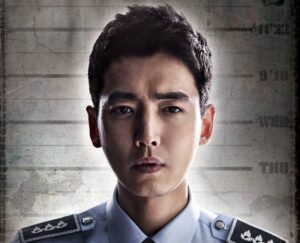
“Prison Playbook” is a dramedy I never wanted to watch. But I’m so glad I did, because it handled social injustice in a way that was palatable to digest, while offering a satisfying ending.

The masterminds behind the superb “Reply” anthology produced another hit series with “Hospital Playlist,” centering around a quintet of long-time friends who are all doctors for the same prestigious hospital.

“Hyena” shows that being called the best doesn’t mean anything in the real world. The plot depicted South Korea’s insidious system of revering lineage as flawed (and stupid). And that referring to a human being as disposable — because they don’t hail from the proper background — depicts who exactly is the human garbage here.

Park Min-Young and Seo Kang-Joon are both skilled actors, whose expressions convey the complicated emotions their characters have. Neither had an easy life and they are almost fearful of expecting — or even wanting — more than what they have.
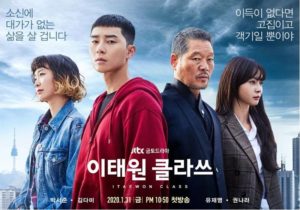
“Itaewon Class” is one of those rare K-Dramas where I disliked both female leads for different reasons. But it just goes to show that a good series doesn’t need a loveline to hold the viewer’s interest.

Jung Hae-In’s adventures in New York are delightful to watch. Here’s hoping he does another season. I know his international fans would love to travel with him vicariously to explore South Korea next.

The overall message of “Extraordinary You” is that we are all extraordinary in our own way. At first, Dan-Oh simply wanted to be the star of the series. But she grew to realize that what she really wanted was to have ownership of her life, rather than following others’ expectations of who she should be.

“Chicago Typewriter” takes place in modern-day Seoul, but some of the best storytelling occurs during flashbacks to the 1930s, when Korea was under Japanese occupation. There, we learn about three resistance fighters whose lives and friendship will set the tone for the 21st Century arc.

“Someone said seeing BTS was like seeing a unicorn,” RM says in this fifth episode of “Bring the Soul.” “When you think about it, no matter what’s happening behind the stage, just showing our faces is a remarkable experience for some people.” In other words, the group is well aware that there are fans all over the world who will never get the chance to attend a BTS concert. They know that the ones who did manage to snare a ticket often had to go through a Hunger Games-like ordeal to purchase it. For that reason, the group strives to be perfect, to give each show 110% and to perform through their injuries when possible, even when they’re advised not to.

“My Ahjussi” is a satisfying K-Drama focusing on Dong-Hoon, a mid-level engineer who lives a mundane life. He works hard, hangs out with his brothers every evening and goes home to a house where his wife is rarely there. And if she is, she holes away in her home office and ignores him. It can’t be a coincidence that the set designer chose an apartment complex that looks more like a prison than a home for their residence.
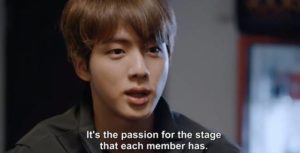
More so than any episode from last year’s “Burn the Stage” (or the first episode of this series), viewers can see how lonely life on the road can be. The seven-man group may smile on stage and charm their interviewers with witty quips and soundbites. But touring can wear them down, even when they know they are in a privileged position that many are envious of.