“Juvenile Justice” (소년 심판)
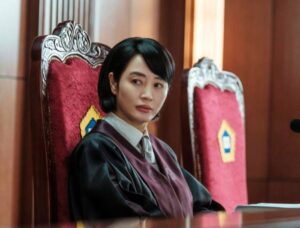
There has been much debate in South Korea about how to punish and rehabilitate underage criminals. “Juvenile Justice” deals with these issues in a taut manner, using the law to mete out judicial revenge.
Journalist, Author & Syndicated Columnist
There has been much debate in South Korea about how to punish and rehabilitate underage criminals. “Juvenile Justice” deals with these issues in a taut manner, using the law to mete out judicial revenge.

“The Hymn of Death” is a bittersweet three-hour mini-series that tells the real-life story of Yum Sim-Deok — Joseon’s first soprano — and Kim Yoo-Jin, a renowned writer and playwright. Set during the period when Korea was under Japanese rule, the tragic story is familiar to many Koreans.

Based on Gong Ji-young’s 2009 novel, “Silenced” is a brutal look at the systematic torture of children at a facility for the hearing impaired. Though Gong’s book is fictional, the stories she tells are based on the decades of real-life abuse that handicapped students endured at the Gwangju Inhwa School for the Deaf.
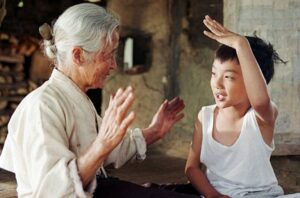
“The Way Home” is a bittersweet film about a young Seoul boy who is forced to spend the summer with his grandmother, who lives in the countryside. It’s not a quaint rural area that rich folks like to vacation in. Rather, it’s a small village where the bus comes on a irregular schedule and an angry cow chases little children.

“Melancholia” is a nuanced series that depicts how a math teacher (Im Soo-jung) encourages her morose student (Lee Do-hyun) to live up to the potential he had as a child genius.

Lately, there have been some compelling K-dramas where the female lead is more than just an object of desire. Rather, she is the capable one who is an integral part of the plot. Here are 11 K-dramas from recent years that exemplify female empowerment.

Narrowing down the best-of list to just 11 K-dramas was painstaking. But these shows from 2021 are must-sees that you will want to add to your watch list. Below, dive into the best K-dramas of 2021.
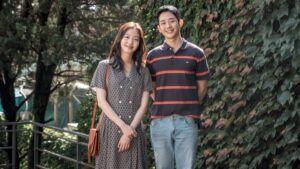
Set in the 1990s, “Tune in for Love” is a beautiful slice-of-life film focused on a young couple who meet as teenagers, lose touch, and reunite on and off throughout their twenties.
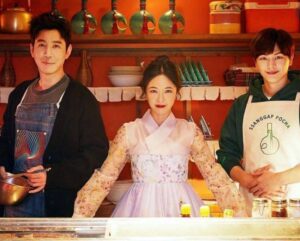
Hwang Jung-Eum is one of my absolute favorite actresses. I love everything about her, especially the forthright way she delivers her dialogue. Her chemistry with both leading men is on point and viewers can see the family-like dynamics shared by the trio. Choi Won-Young and Yook Sun-Jae are superb actors whose subtle (and overt) mannerisms speak to viewers without them having to utter a word.

Director Yeon Sang-Ha (“Train to Busan”) adapted “Hellbound” from his own webtoon of the same name. He makes it clear that cults are the true sinners, which manipulate people’s lives with fear. And that hell isn’t necessarily a place foreign to us, because it’s where we may already be living.

Lee Jung-Jae and Shin Min-A star as a political dream team working for opposing candidates. He is a former police officer, whose goal it is to become an assemblyman. She was an attorney and on-air journalist before becoming an assemblywoman.

“Hometown Cha-Cha-Cha” is one of those slow-moving K-dramas that makes viewers wish they had the same kind of relationship as the characters do — not just with love interests, but with their friends.

You know how in most action series, there is that one guy who can fight a team of gangsters, get stabbed and bounce back into action in no time? In “My Name,” that guy is a kickass woman.

“Hospital Playlist” is a good series, where the core friendship is warm and engaging. The five doctors have the kind of relationship with each other that makes me envious … even though I don’t particularly feel a need for that many close friends in my real life. (haha)
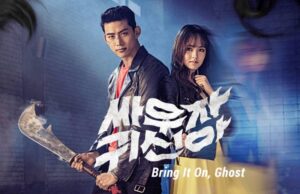
The series parable seems to be that if you have hate in your heart, you are susceptible to being influenced to hurt others, just because you can. “Bring It On, Ghost” started off as an uneven series. But once you get past the first couple episodes, it becomes a must-see K-drama that’s filled with action and a lot of heart.

“Racket Boys” is a sweet series centering around a teenager, who’s forced to quit baseball when his father moves them from Seoul to the countryside. Disappointed and bitter, Hae-Kang begrudgingly joins the badminton team — which his father coaches — on the condition that if the team wins a medal, his dad will get them Wi-Fi at their house.
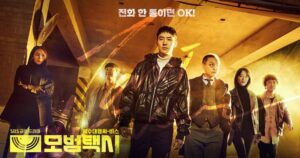
“Taxi Driver” is a thrilling series in the vein of “The Equalizer,” “Profiler” and “The Pretender.” Rainbow Taxi Service driver by day and justice seeker by (mostly) night, Do-Gi and his team are funded by a philanthropist whose parents were murdered decades ago. The goal is to rehabilitate them, but what it all boils down to is revenge.
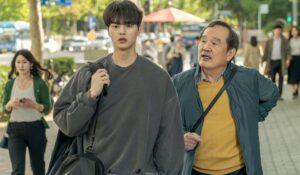
For septuagenarian Shim Deok-Chul, his unfulfilled dream is ballet. As a child, he had wanted to take lessons, but his father stopped him. There was the lack of money. But there was (and still is) also the prejudice against men who participated in the artform. For many close-minded people who fear the unknown, dancing isn’t a masculine hobby to take up.

The action sequences in “Vagabond” are thrilling and the plot is fast-paced and engaging. But the ending seems rushed, incomplete and utterly unsatisfying.

This second season of “Penthouse” is full of subterfuge, a revelation about who one of the students’ real father is and lots and lots of comeuppance. Oh, and there’s the murder of another teenage student, too.