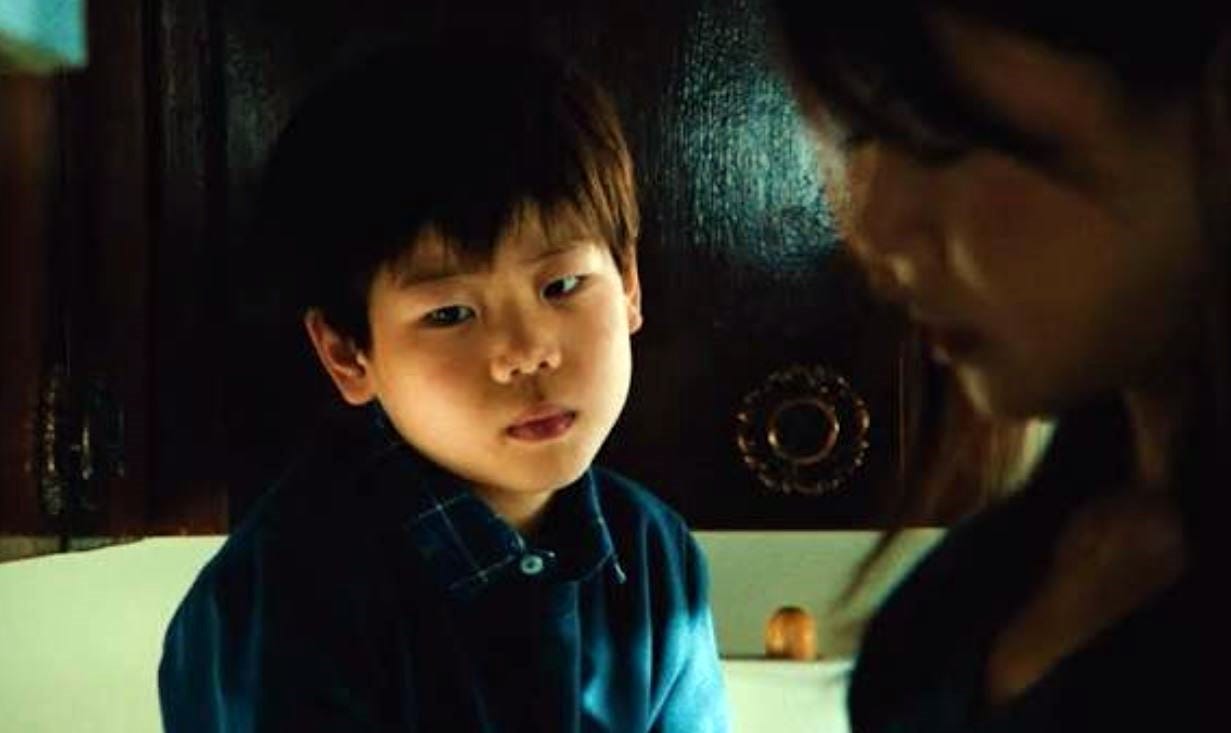
For anyone who couldn’t attend a loved one’s funeral, Kevin Jin Kwan Kim’s latest short film, Goodbye, from Afar, captures how heartbreaking it can be. Running just over a minute long — about half a minute less than his earlier Halmeoni — Kim succinctly conveys grief, guilt, and regrets.
View this post on Instagram
When I saw the daughter in the U.S. crying for her mother in South Korea, I thought about my own mother when she received the news that her father had died in Daegu. I don’t recall seeing my mother cry, because she never cried in front of us. By then, she hadn’t seen my grandfather for at least a decade — about the same time our family had been living in the United States.
I remember my father telling her to return to Korea for the funeral and my mother not going. I’m positive she didn’t go because she didn’t want to spend money we didn’t have. My father couldn’t afford to take time off from work, and neither could my mother.
In retrospect, my father should’ve bought the ticket, driven her to the airport, and insisted that she go. But when you don’t have money and when you have no guarantee that the job you left for a few days would be there when you returned, those really aren’t feasible options.
Technically, she made a choice not to go. But it was also a choice not to go into debt — something my mother feared almost as much (or more) than death.

As I scrolled down and read the comments left by other viewers who had watched the minute-long film, I came across this one by @/s__ka668810. If wellllllll ackkkksssshhhuuuaaallllyyyy was a person, it would be them.
Maybe they’re a troll. Maybe they’re a bot. Or maybe they’re just incredibly stupid and have no knowledge of why immigration even exists.

Not too long ago, I wrote about a racist incident from many years ago that I still think about. It involved Boy Scouts using racist slurs to my (then) five-year-old, myself, and another little girl as we left the local swimming pool. Frustrated and angry, I shared a simple sentence on Facebook:
“Sometimes, I wish I lived in a place where everyone looked like me.”
The comments that my (white) friends and neighbors left were eye-opening. While many were sympathetic, there were also quite a few who used my post to declare that they, too, had experienced racism. For instance, some mentioned that they were made fun of for their European accents.
I pointed out that people should not make fun of anyone’s accent, but just by being white, they are perceived as being American until they open their mouths. Meanwhile, I speak perfect unacccented English (for a Chicagoan, anyhow). But because of my face, I am targeted as a foreigner. One wrote:
So my problems would be solved if I don’t talk. Yeah. That is not going to happen. On a side note my dear Jae-Ha white caucasian still has Asian in it.
I didn’t want to make enemies of neighbors, so I just replied:
I’m not denying that immigrants who are white don’t face discrimination. But at first sight, racists have no ammunition to use against you. If you had walked out of the pool today with your children, no one would’ve shouted out words in faux French or German or Swedish. Because to these racist morons, you look like one of them.
Another friend, thinking she was being helpful, rather than condescending, said:
Oh, Jae, you’d face issues in Korea, too.
Yes, I know that. Issues exist everywhere. But the thesis of my post was that I. Would. Blend. Into. A. Country. Where. East. Asians. Are. The. Majority. And that is an incredibly attractive prospect.
When we immigrated to the U.S., South Korea was still dirt poor. My parents didn’t uproot our lives because they thought it’d be a fun expat experience for our family. Rather, as I wrote in my review of Minari:
After the Korean War ended, but before South Korea built itself into an economic powerhouse known for its technology, BBQ and K-pop, my parents dreamed about immigrating to the United States, too. Migook, as the U.S. is known in Korea, literally translates into beautiful country… America would give us opportunities we wouldn’t have back home. Of course, this idealized version of America didn’t exist for us. But what did exist was enough for us to grab onto and flourish.
Would we have done well if we had stayed in Korea? Probably, because my parents were resilient. But would I choose to move to Korea permanently at this stage of my life? No, for the same reason that my father wanted to be buried here rather than in our family plot in Seoul.
His family is here, he said, and he wanted to be near us even in death.
© 2026 JAE-HA KIM | All Rights Reserved
One thought on “Kevin Jin Kwan Kim’s “Goodbye, From Afar” is a Beautiful 1-Minute Film About Love, Death, and Immigration”
Comments are closed.