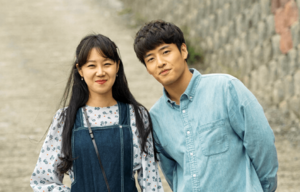
“Come and Hug Me” (이리와 안아줘)

The saving grace of “Come and Hug Me” is that it drives home the point that bloodlines don’t define who you are or who you will become — and that just because you passed your DNA onto a child, that doesn’t make you a good parent.

“BTS: Bring the Soul”: Episode 5

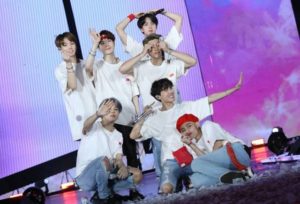
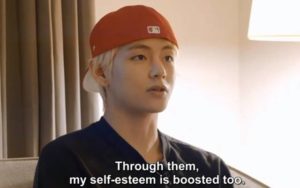
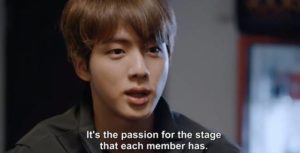
“Someone said seeing BTS was like seeing a unicorn,” RM says in this fifth episode of “Bring the Soul.” “When you think about it, no matter what’s happening behind the stage, just showing our faces is a remarkable experience for some people.” In other words, the group is well aware that there are fans all over the world who will never get the chance to attend a BTS concert. They know that the ones who did manage to snare a ticket often had to go through a Hunger Games-like ordeal to purchase it. For that reason, the group strives to be perfect, to give each show 110% and to perform through their injuries when possible, even when they’re advised not to.

“My Ahjussi” (나의 아저씨)

“My Ahjussi” is a satisfying K-Drama focusing on Dong-Hoon, a mid-level engineer who lives a mundane life. He works hard, hangs out with his brothers every evening and goes home to a house where his wife is rarely there. And if she is, she holes away in her home office and ignores him. It can’t be a coincidence that the set designer chose an apartment complex that looks more like a prison than a home for their residence.

“BTS: Bring the Soul”: Episodes 3 & 4

There have been countless think pieces on who will be the next BTS or how someone could create the next BTS. This is an irrational concept, because what they essentially are saying is, “How do we conjure up another group that gets this much press and makes this much money?” If money was all BTS was after, they could retire now and be set for life. But what drives them is the relationship they have with each other and their knowledge of the influence they have on others, which can be channeled into a greater good.

“Search: WWW” (검색어를 입력하세요: WWW)

“Search: WWW” is the only K-Drama I can think of where women had the kind of lead roles that ordinarily would’ve gone to men. The female characters not only were the rainmakers where they worked, they were the decision makers who the men followed.

“BTS: Bring the Soul”: Episode 2

More so than any episode from last year’s “Burn the Stage” (or the first episode of this series), viewers can see how lonely life on the road can be. The seven-man group may smile on stage and charm their interviewers with witty quips and soundbites. But touring can wear them down, even when they know they are in a privileged position that many are envious of.

“One More Time” (헤어진 다음날)

“One More Time” was Kim Myung-Soo’s first lead role. Best known to K-Pop fans as L from the group Infinite, he certainly had the look of a singer-songwriter-guitarist down pat. With a better script and direction, he could’ve really done something with this part. But as it was, Tan was an unsympathetic character who was old enough to be responsible, but too immature to give up his rock ‘n roll lifestyle to pay off his considerable debts.

Happy Chuseok from BTS!

In Korean culture, Chuseok is a major holiday that’s equivalent to Thanksgiving. And SBS gave viewers a gift by airing the “BTS Variety Chronicles” — a collection of hand-picked segments from the group’s various variety show appearances on the network. That inspired us to curate our own best of picks, but we’re not going to limit it to just SBS shows or funny moments. Here are some of our favorite BTS appearances. What’s yours?

“Love Alarm” (좋아하면 울리는): Season 1

As a young woman passes by two men, an app on her phone goes off. “There is one person who loves you,” it says. The app is called JoAlarm (좋알람), which alerts users if there is someone within 10 meters who loves them. If you’re thinking that JoAlarm sounds nonsensical, you’re right — in English, it doesn’t make sense. But in Korean, it literally means an alarm to measure if someone likes your. (Remember that Jay Park song, “Joah”/”좋아”? 좋아 means good or to like. Now it makes perfect sense, right?)

“Hotel del Luna” (호텔 델루나)

Hotel del Luna is a gorgeous five-star hotel that only accepts dead souls, before they move onto heaven or hell. Yeo plays a Harvard-educated hotelier who is forced to work at the eponymous establishment, due to an agreement his father had made years ago. His boss is the otherworldly Mal-Wol, who has run Hotel del Luna for the past 1,300 years. She is neither dead or alive, but can’t peacefully enter the afterlife until she has settled her personal business on earth. Though the pair’s relationship starts off contentiously, they slowly fall in love and feel they are tied together by a force that can’t be explained.

“One Spring Night” (봄밤)

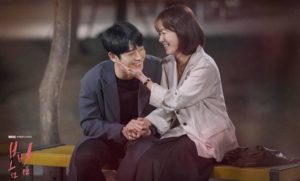
It’s not surprising that “One Spring Night” has the same melancholy vibe as “Something in the Rain” (aka “Pretty Noona Who Buys Me Food”). Besides the same leading man, the series reunites screenwriter Kim Eun and director Ahn Pan-Seok. While the storyline is different, the main thrust remains the same: The central male character is deemed as unsuitable to be with the female character, because of an unforgivable character flaw that isn’t a flaw at all.

“My First First Love” (첫사랑은 처음이라서): Season 2

I knew going into this series who she would end up with (and so will you, because you’re not stupid). I have no problem with that. But what I thought was a cheap cop-out was the way Do-Hyun went from being an upstanding, fun and thoughtful young man in the first season, into a suspicious and jealous boyfriend in this second season.

“Ms. Hammurabi” (미스 함무라비)

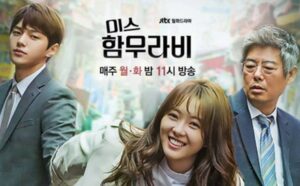
Like most Korean dramas, there is a love triangle in “Ms. Hammurabi.” The difference is that there are so many interesting plots developing here that I cared more about the human rights issues that the judges were fighting for than the romance.

“Her Private Life” (그녀의 사생활)

“Her Private Life” starts off as a clever comedy about Sung Duk-Mi — a cultured art curator who also is a diehard fangirl. But it also deftly tackles child abandonment, reunification and forgiveness. The concept of what constitutes a family was a recurring theme. It was refreshing to see that relationships based on bloodlines weren’t the only ones valued and that families are sometimes borne from tragic circumstances.

“Love in the Moonlight” (구르미 그린 달빛)

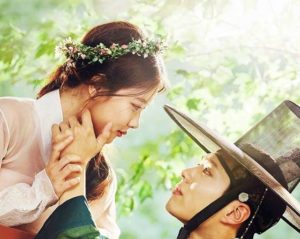
Second lead syndrome is strong in “Love in the Moonlight.” And although it’s obvious from the beginning who will end up with the girl, I honestly would’ve been fine with either. Are you #TeamBoGum or #TeamJinYoung?!

“My First First Love” (첫사랑은 처음이라서): Season 1

Five friends, four of them living together in one house. It becomes clear early on that the writers are setting up the premise for the roomies to pair off romantically. But because this is a K-Drama, there’s a hitch and, in this case, it’s the fifth friend who lives at home with his hard-working father. (Less of a storytelling inconvenience is a snooty rich girl who dates the male lead.)

“Kill Me, Heal Me” (킬미, 힐미)

I finished watching the final episode of “Kill Me, Heal Me” early this morning, and I am left with a sense of melancholy — not because the ending was unhappy (it wasn’t), but because the series was so good I wanted to see more. This K-Drama unravels at a languid pace. As each new backstory is revealed, it felt like a jolt to my heart.