“Secret Garden” (시크릿 가든)
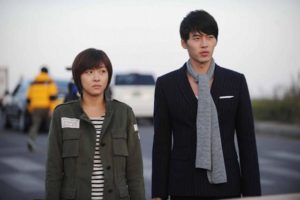
“Secret Garden” is one of those K-Dramas that gets better as it progresses — even if that progression sometimes moves at a snail’s pace.
Journalist, Author & Syndicated Columnist
“Secret Garden” is one of those K-Dramas that gets better as it progresses — even if that progression sometimes moves at a snail’s pace.

Five friends, four of them living together in one house. It becomes clear early on that the writers are setting up the premise for the roomies to pair off romantically. But because this is a K-Drama, there’s a hitch and, in this case, it’s the fifth friend who lives at home with his hard-working father. (Less of a storytelling inconvenience is a snooty rich girl who dates the male lead.)

I finished watching the final episode of “Kill Me, Heal Me” early this morning, and I am left with a sense of melancholy — not because the ending was unhappy (it wasn’t), but because the series was so good I wanted to see more. This K-Drama unravels at a languid pace. As each new backstory is revealed, it felt like a jolt to my heart.
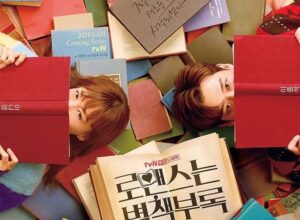
I could go on and on about the romance elements. But because I knew the lead character would be fine regardless of who she chose — and that the men would be OK as well — I was more fascinated by the dynamics at the workplace and how difficult it can be for women to juggle being a mom with having a job outside of the home.

“Angry Mom” brings up the question of whether it’s OK to be a bully, if you are standing up for the rights of the weak.

A serialized remake of the 2012 film “Masquerade” (광해: 왕이 된 남자), “The Crowned Clown” stars Yeo Jin-goo as young, immoral king Yi Heon, whose crown is constantly under threat. Drugged out on opium (initially unknowingly, and later willingly), he eagerly agrees to allow a lookalike jester, Ha Seon, to impersonate him until things are under control. In other words, let the clown be assassinated in his place.

Recognizing these cultural differences and relating to even the most unrelatable stories are all part of what makes watching Korean dramas so satisfying. Where else can you experience second lead syndrome (where you’re actually rooting for the other guy to get the girl and not the main guy), eat instant ramen along with the characters, and learn a few foreign words in the process? Daebak! Read more in my article for MTV News.

“My ID is Gangnam Beauty” specifically tackles South Korea’s obsession with physical looks, but the storyline carries over to many cultures, where the standards of beautiful — especially for girls and women — is unrealistic.

Four years after “The King Of Mask Singer” premiered on MBC in South Korea, “The Masked Singer” made its U.S. debut on FOX. The American remake — in all its gaudy splendor — is a bonafide hit.
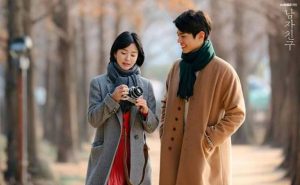
“Encounter” is a treat for the eyes. Besides the obvious attractiveness of lead actors Song Hye-Kyo and Park Bo-Gum, the scenery — especially in Havana, Cuba — is a lush, welcome guest star. Unfortunately, by the time the credits have rolled, I realized that most of the series was much ado about nothing.

A unique series that kept me guessing until the end, “Memories of the Alhambra” starts off with a strong, intriguing premise: A teenage videogame developer has created an addictive world of augmented reality (AR), where players interact seamlessly with medieval warriors. Gamers go to real-life places (e.g. restrooms in neighborhood bars) to acquire weapons, which are only visible to people wearing special optical lenses.
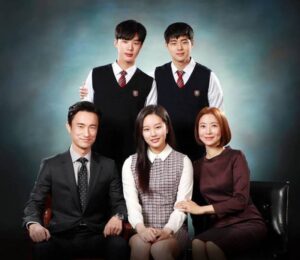
Having just finished “Sky Castle,” I am left with a little lump in my throat, not because it’s over, but because I know there are so many children out there who are at the mercy of a brutal educational system — where you are told your life means nothing if you don’t get into Seoul National University, Korea University or Yonsei University.

Helmed by writer Kim Eun-Sook and director Lee Eung-Bok — who previously collaborated together on “Descendants of the Sun” and “Goblin: The Lonely and Great God” — the misleadingly named “Mr. Sunshine” does a beautiful job of juggling multiple story lines that are full of suspense, intrigue and achingly quiet romance.
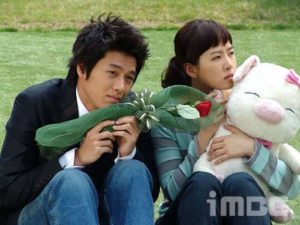
Near the end of “My Lovely Sam-Soon,” the titular character has an epiphany: “Even though I liked you, without you, I will live well.” Does she stick to her guns? Or does she relent and allow a man to boomerang back into her life?
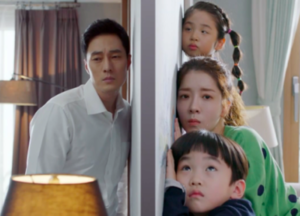
A spy and a widowed housewife become embroiled in espionage, kidnapping and murder. But it’s not all thrills in this breezy series (also known as “Terius Behind Me”), which offers comic relief in the form of an apartment complex full of nosy neighbors, who are almost as skilled in ferreting out secrets as the secret agents.

A remake of the 2002 Japanese TV series, “Sora Kara Furu Ichioku no Hoshi,” “The Smile Has Left Your Eyes” wasn’t nearly as subversive as the original, which had almost no moral compass (incest, murder, underage sex). A Korean film could’ve tackled those topics. But I knew there was no way a primetime Korean drama would delve too much into the seamier aspects of society.

I had no idea this series even existed. It popped up on YouTube when I was looking around for something to watch while I ate my late-night snack. (It was tteok-bokki and japchae, for those who have to know.)

“It’s Okay, That’s Love” is sold as a wacky K-Drama about a psychiatrist and a playboy celebrity author. And the first couple episodes did little to disprove that storyline. But as it progressed, the series laid out the plot in a beautiful, languid way that was full of love and heartbreak, before culminating in the kind of glorious truth that is both liberating and intoxicating.
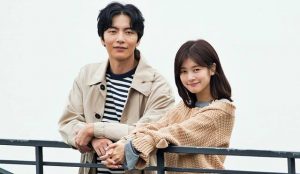
“Because This Is My First Life” is a bittersweet series about two broken people who decide to cohabitate for financial reasons. It is also a story that is heartwarming, funny and romantic. The melancholy start to this Korean drama gave me the same feels as “Pretty Noona Who Buys Me Food” (in a good way).

I watched this series, because I was curious to see how well Lee Jong-Suk acted early on in his career. Answer: He was very good, even in a so-so K-Drama. “School 2013” tackles many serious topics — bullying, suicide, overbearing parents — but if you want to watch a superior film about Korean high school students, opt for “Once Upon a Time in High School.”