“My Secret, Terrius” (내 뒤에 테리우스)

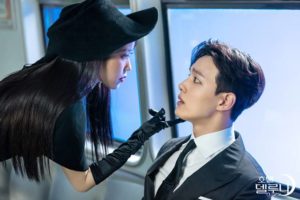
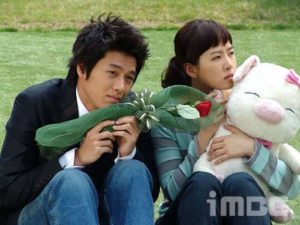
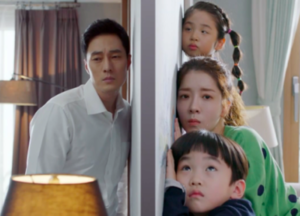
A spy and a widowed housewife become embroiled in espionage, kidnapping and murder. But it’s not all thrills in this breezy series (also known as “Terius Behind Me”), which offers comic relief in the form of an apartment complex full of nosy neighbors, who are almost as skilled in ferreting out secrets as the secret agents.

“It’s Okay, That’s Love” (괜찮아, 사랑이야)

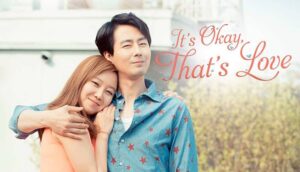
“It’s Okay, That’s Love” is sold as a wacky K-Drama about a psychiatrist and a playboy celebrity author. And the first couple episodes did little to disprove that storyline. But as it progressed, the series laid out the plot in a beautiful, languid way that was full of love and heartbreak, before culminating in the kind of glorious truth that is both liberating and intoxicating.

“Because This Is My First Life” (이번 생은 처음이라)

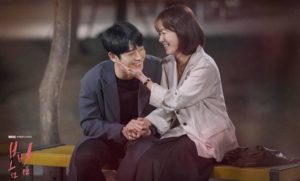
“Because This Is My First Life” is a bittersweet series about two broken people who decide to cohabitate for financial reasons. It is also a story that is heartwarming, funny and romantic. The melancholy start to this Korean drama gave me the same feels as “Pretty Noona Who Buys Me Food” (in a good way).

“My Love, Don’t Cross That River” (님아, 그 강을 건너지 마오)

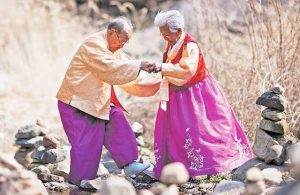
“My Love, Don’t Cross That River” is a love story that shows there is beauty to be found in everyday life, even with death looming. A languid documentary about an elderly couple that has been married for more than 70 years, the 86-minute film — which is both tranquil and heartbreaking — is deftly directed by Jin Mo-Young.

Say My Name: Who’s Your Fave K-Drama “Jae-Ha”?

My name isn’t uncommon in Korea. But, as you can imagine, I never had to worry about a classmate sharing my first name after we immigrated to Chicago. On the other hand, whenever my friends and I went to the mall to buy keychains or anything that had a name pre-printed on it, I never found my name listed anywhere along with the Julies and Kevins. Imagine my delight when I started watching Korean Dramas and saw characters who share my name!

“While You Were Sleeping” (당신이 잠든 사이에)

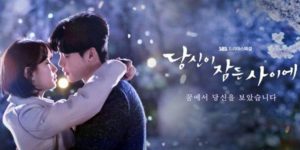
One of the things that I really love about Korean dramas is that many of them center around protagonists who knew each other as children — and reunite as adults. And such is the case with “While You Were Sleeping,” which follows a group of young adults who inexplicably see each other in their dreams.

“Pinocchio” (피노키오)

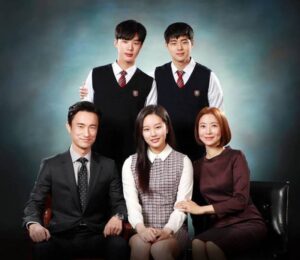
I was going to review “Pinocchio” simply as I would any other K-Drama. But I started to write this at the same time that Soon-Yi Previn broke her silence about her relationship with Woody Allen (her husband) and Mia Farrow (her adoptive mother, and Allen’s former long-time girlfriend) — and that affected my take on this Korean drama. Is it wrong for family members who aren’t biologically-related to have a romantic relationship? If you condemn Allen and Previn, can you condone the two lead characters in this series?

“Pretty Noona Who Buys Me Food” (밥 잘 사주는 예쁜 누나)

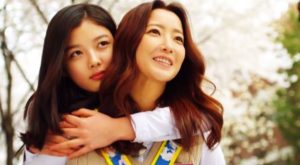
“Pretty Noona Who Buys Me Food” is sold as a May-December romance. That may be one reason I wasn’t eager to watch this series. While the central storyline delves into the relationship between the pretty noona and her childhood friend’s younger brother, the most compelling subplot — that wasn’t really fleshed out — was workplace sexual harassment. By the way, this isn’t a May-December romance.

“What’s Wrong with Secretary Kim” (김비서가 왜 그럴까)

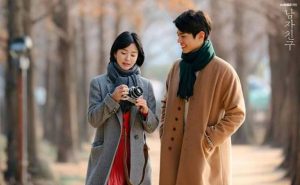
There’s very little wrong with the chemistry in the Korean series, “What’s Wrong with Secretary Kim.” The attraction between the main characters is so strong that (of course) the off-screen dating rumors have surfaced. Both Park Seo-Joon and Park Min-Young deny they are anything more than friends, but you almost can’t blame netizens for their wishful thinking.

“Be With You” (지금 만나러 갑니다)

If you could re-live a part of your life, knowing that the time you had with your loved ones would be fleeting, would you risk it? The Korean feature film “Be With You” (지금 만나러 갑니다) offers this intriguing concept. It wasn’t perfect, but it made my heart hurt … and happy.

“Healer” (힐러)

A smart, 20-episode series that was well cast, it offered intrigue, action, comedy and a bittersweet love story that ends in such a way that the viewer is left assured that the couple stays together forever. This is also one of the rare Korean dramas I’ve seen where the lead characters aren’t involved in a love triangle (though there is a sub-plot where unrequited love between secondary cast members plays a role).

“BTS: Burn the Stage”: Episode 7

Having your music cut out mid-song is a living nightmare for musicians. But if you have the wherewithal to go with the flow with the good and the bad, those moments also can become a highlight of the evening. During a concert in Osaka last year, J-Hope was faced with exactly this dilemma. He describes it as the worst thing that can happen at a show. But he handled it with aplomb.

“BTS: Burn the Stage”: Episode 6

The men in BTS are still so young. But I get the impression that they are not oblivious to the passage of time. They know the half life of a musician’s career isn’t forever. Far from it. And while a part of me feels sad that they had to grow up so fast in the music business, the other part is grateful that they appear to be making plans for the future, even as they are enjoying what they have today.

“BTS: Burn the Stage”: Episode 5

I was delighted that Chicago was so beautifully prominent in this episode. Late one night back at their hotel, they’re trying to figure out how to perform on a tiny stage for their first U.S. television appearance. I used to do a little work for JBTV way back when, and I can tell you that the stage is tiny. It’s fine for most of the bands that pass through Chicago. But most bands aren’t BTS.

“BTS: Burn the Stage”: Episode 4

The argument between two members of BTS was hyped up as being a shocking revelation in the previews. But for anyone who has a sibling — or who has ever been in a serious relationship — speaking the uncomfortable truth is par for the course. Arguments often aren’t about what you’re addressing at the time, but rather all the little things that have built up to make you reach that boiling point. What was more interesting to me was watching Jin and V dig to the bottom of the real issue: respect.

“Call Me Mother” (마더)

A common element running throughout the plot is that you are not a “real” child if you don’t share your parents’ DNA. One of the central characters views herself as superior to her adopted sister, because … adoption. The emphasis on a family’s pure bloodline is still in effect today in Korea. And though more adoptive families are telling their children about their adoption stories, many still let their kids assume they are biologically related to their adoptive parents.