“Vagabond” (배가본드)

The action sequences in “Vagabond” are thrilling and the plot is fast-paced and engaging. But the ending seems rushed, incomplete and utterly unsatisfying.
Journalist, Author & Syndicated Columnist
The action sequences in “Vagabond” are thrilling and the plot is fast-paced and engaging. But the ending seems rushed, incomplete and utterly unsatisfying.

This second season of “Penthouse” is full of subterfuge, a revelation about who one of the students’ real father is and lots and lots of comeuppance. Oh, and there’s the murder of another teenage student, too.

“Tomorrow, With You” has so many wonderful elements — especially the adorable chemistry between the two leads. But the frustrating part was watching just about everyone in the series keep integral secrets from each other in an attempt to change — and protect — their future.

The New York Times interviewed me for their piece about product placement (like Subway!) in K-Dramas.

“Sweet Home” has some incredible highs. But unlike “Kingdom” or “Uncanny Counter,” where action supplements the storyline, “Sweet Home” has too much mediocre filler to make it a truly great K-drama.

Most of the characters in “Lovestruck in the City” would’ve benefited with some therapy to work things through and move on from unhealthy relationships that should’ve been severed early on.

Like “Train to Busan,” “Kingdom” was released well before the coronavirus outbreak cause pandemonium worldwide. Both are sociopolitical projects disguised as zombie horror thrillers, where those in power don’t try to prevent the outbreak, so much as they try to stop news of the outbreak from being released. The public’s ignorance suits their own needs.

There are several subplots percolating in “Run On,” but the most interesting was the bullying, especially in light of the accusations of real-life bullying scandals surrounding idols and actors. This K-drama offers a perspective that bullying is a part of Korean hierarchy, and those with wealthy and powerful parents won’t be punished. Those who are poor and powerless won’t get justice.

Well written and terrifically acted, “The Uncanny Counter” is suspenseful and heartwarming. And in a rarity for Korean dramas, there is no second lead syndrome romance to mess with the plot.

“Penthouse” starts off with the most makjang storyline of the year. This deliciously gripping female-centric series revolves around rival classical singers and includes a (dun dun dun!) switched-at-birth plot twist. Did I mention that one of male characters has a torture chamber in his home, because, why not? Mixed in with the outrageous content is a parable about the haves and the have nots.

“Kairos” starts off promising and is reminiscent of the best elements of “Signal.” But where the latter kept the suspense going until the end, “Kairos” fizzles out midway, with redundant story arcs and some characters that are not only irredeemable, but highly unlikeable. And I’m not talking just about the villains.

“Start-Up” has a second male lead (Kim Seon-ho) who is so charismatic that his storyline often overshadows that of the very handsome lead (Nam Joo-hyuk). Ultimately, the K-Drama reinforces the idea that no matter how broken a family is, the ties remain – for better or worse.
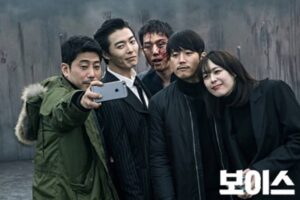
“Voice” is a gory police procedural revolving around a police officer who can solve cases with her astute hearing and the “mad dog” detective who learns to trust her instincts. Their goal is to find the serial killer responsible for killing her father and his wife.

11 Best K-Dramas of 2020: Rivals, Lovers, and Slow Burning Intrigue. These shows are must-watch television. My latest for Teen Vogue.

“Do Do Sol Sol La La Sol” had a promising start that was spoiled by an ending that came out of nowhere.

“Record of Youth” is Park Bo-Gum’s swan song before he enlisted to serve his mandatory military duty in South Korea. While it’s meant to be a traditional love story, the friendship between the three male leads and the woman Park loves was the real draw.

A team of doctors struggle against a conglomeration that is set on privatizing their hospital to optimize profit. As Lee Dong-Wook’s character points out, the chaebol in charge wants to turn the hospital into something that only the wealthy can afford.

There’s so much lying going on in the second season of “Stranger” that it’s difficult to figure out who’s truth is real. There are so many players convinced that their own criminal acts are for the betterment (cough cough) of Korea’s economy and future that they should be given a pass on their own wrongdoings.

The chemistry between Lee Joon-Gi and Moon Chae-Won is strong in “Flower of Evil.” Viewers never doubt their love for each other. One of the most telling signs of their relationship is that even during times when she isn’t sure who he really is, she never stops referring to him as 자기야 / jagiya, which literally means that he is hers.
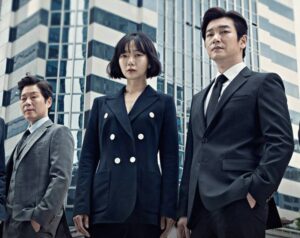
Cho Seung-Woo and Bae Doona are superb portraying a taciturn prosecutor and an intuitive police detective, respectively. He is aloof and shows no emotions. She is thorough and unafraid to go against her superiors’ orders to ferret out the truth.