“Because This Is My First Life” (이번 생은 처음이라)
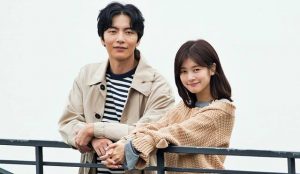
“Because This Is My First Life” is a bittersweet series about two broken people who decide to cohabitate for financial reasons. It is also a story that is heartwarming, funny and romantic. The melancholy start to this Korean drama gave me the same feels as “Pretty Noona Who Buys Me Food” (in a good way).


“My Love, Don’t Cross That River” (님아, 그 강을 건너지 마오)

“My Love, Don’t Cross That River” is a love story that shows there is beauty to be found in everyday life, even with death looming. A languid documentary about an elderly couple that has been married for more than 70 years, the 86-minute film — which is both tranquil and heartbreaking — is deftly directed by Jin Mo-Young.

“School 2013” (학교 2013)

I watched this series, because I was curious to see how well Lee Jong-Suk acted early on in his career. Answer: He was very good, even in a so-so K-Drama. “School 2013” tackles many serious topics — bullying, suicide, overbearing parents — but if you want to watch a superior film about Korean high school students, opt for “Once Upon a Time in High School.”

Say My Name: Who’s Your Fave K-Drama “Jae-Ha”?

My name isn’t uncommon in Korea. But, as you can imagine, I never had to worry about a classmate sharing my first name after we immigrated to Chicago. On the other hand, whenever my friends and I went to the mall to buy keychains or anything that had a name pre-printed on it, I never found my name listed anywhere along with the Julies and Kevins. Imagine my delight when I started watching Korean Dramas and saw characters who share my name!

“While You Were Sleeping” (당신이 잠든 사이에)

One of the things that I really love about Korean dramas is that many of them center around protagonists who knew each other as children — and reunite as adults. And such is the case with “While You Were Sleeping,” which follows a group of young adults who inexplicably see each other in their dreams.

“Pinocchio” (피노키오)

I was going to review “Pinocchio” simply as I would any other K-Drama. But I started to write this at the same time that Soon-Yi Previn broke her silence about her relationship with Woody Allen (her husband) and Mia Farrow (her adoptive mother, and Allen’s former long-time girlfriend) — and that affected my take on this Korean drama. Is it wrong for family members who aren’t biologically-related to have a romantic relationship? If you condemn Allen and Previn, can you condone the two lead characters in this series?

“I Hear Your Voice” (너의 목소리가 들려)

I finished watching “I Hear Your Voice” around the same time that I started “Pretty Noona Who Buys Me Food.” Both deal with older women/younger men plots, where the woman is about eight years older than her partner. The problem I had with “I Hear Your Voice,” though, is that the boy is a high school senior when the relationship begins. And while Soo-Ha certainly is more mature than Hye-Sung in many ways, he is still a teenager.

“Pretty Noona Who Buys Me Food” (밥 잘 사주는 예쁜 누나)

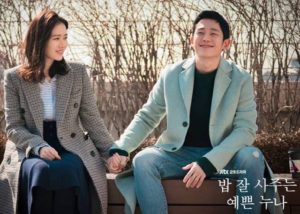
“Pretty Noona Who Buys Me Food” is sold as a May-December romance. That may be one reason I wasn’t eager to watch this series. While the central storyline delves into the relationship between the pretty noona and her childhood friend’s younger brother, the most compelling subplot — that wasn’t really fleshed out — was workplace sexual harassment. By the way, this isn’t a May-December romance.

“What’s Wrong with Secretary Kim” (김비서가 왜 그럴까)

There’s very little wrong with the chemistry in the Korean series, “What’s Wrong with Secretary Kim.” The attraction between the main characters is so strong that (of course) the off-screen dating rumors have surfaced. Both Park Seo-Joon and Park Min-Young deny they are anything more than friends, but you almost can’t blame netizens for their wishful thinking.

Tiffany Young’s “Over My Skin”

Tiffany Young was 15 when she left her native California for Seoul, South Korea, where she hoped to become a music star. Within two years, the teenager made her debut with Girls’ Generation, which would become one of the most successful K-Pop groups ever. She’s back in the U.S. and has a new solo single, “Over My Skin.” My latest interview for Rolling Stone.

“Be With You” (지금 만나러 갑니다)

If you could re-live a part of your life, knowing that the time you had with your loved ones would be fleeting, would you risk it? The Korean feature film “Be With You” (지금 만나러 갑니다) offers this intriguing concept. It wasn’t perfect, but it made my heart hurt … and happy.

How BTS Are Breaking K-Pop’s Biggest Taboos

In modern South Korea, pop stars and politics don’t often mix. While some hip-hop acts (such as Epik High) address controversial topics, many idol groups stick to a slick, apolitical formula with a proven record of success. BTS, who just became the first K-pop act ever to top the Billboard 200 album sales chart, have become a record-setting success story in part because of their willingness to buck this convention. My latest essay for Rolling Stone.

“Healer” (힐러)

A smart, 20-episode series that was well cast, it offered intrigue, action, comedy and a bittersweet love story that ends in such a way that the viewer is left assured that the couple stays together forever. This is also one of the rare Korean dramas I’ve seen where the lead characters aren’t involved in a love triangle (though there is a sub-plot where unrequited love between secondary cast members plays a role).

“Suspicious Partner” (수상한 파트너)

A legal thriller filled with comedy and romance, “Suspicious Partner” is an addictive K-Drama that will keep viewers engaged. Don’t let the 40 episodes put you off. Each episode is less than half an hour long. And the plot is so engaging that the 20 hours goes by quickly.

“BTS: Burn the Stage”: Episode 8

Moreso than any of the previous episodes of “Burn the Stage,” this finale is a love letter from BTS to their fans. The eight-part docu-series ended with “Spring Day” playing over the credits. As many of you already know, that song touches my core every single time I hear it, so I’m a little verklempt as I write this.

“BTS: Burn the Stage”: Episode 7

Having your music cut out mid-song is a living nightmare for musicians. But if you have the wherewithal to go with the flow with the good and the bad, those moments also can become a highlight of the evening. During a concert in Osaka last year, J-Hope was faced with exactly this dilemma. He describes it as the worst thing that can happen at a show. But he handled it with aplomb.