“BTS: Burn the Stage”: Episode 3

정 (jung) is a Korean word that is difficult to define in English. 정 encapsulates a feeling of love and loyalty that people have for one another. They will do things out of the kindness of their hearts, rather than as quid pro quo. As I watched the members of BTS drinking and laughing together, I realized that it was this 정 they had for each other that was as much of a component of their success as anything else.

“BTS: Burn the Stage”: Episodes 1 & 2

I imagine that for the members of BTS, presenting an idealized version of their real selves was par for the course. But with “Burn the Stage,” they have come to terms with who they truly are and are confident enough to show it to the public. It is difficult to explain why this first episode was so moving for me. Certainly, there is the aspect of seeing Asian Representation so beautifully presented; and in a manner that doesn’t exoticize these young men as strange creatures from a foreign land.

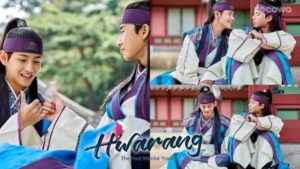
“Hwarang” (화랑: 더 비기닝)

“You get to decide what kind of King you are going to be.” Don’t remember that line from “Hwarang”? That’s because it’s a quote from the blockbuster film, “Black Panther.” When the newly crowned king, T’challa, worries about how he will rule over his subjects, Nakia tells him, “You cannot let your father’s actions define your life.

“Go Back Couple” (고백부부)

If you could go back to your past, would you? And, if so, what would you change? That’s the premise for “Go Back Couple,” a thoroughly-enjoyable drama filled with charismatic leads and a plot that is both funny and touching — especially for those of us who are already parents.

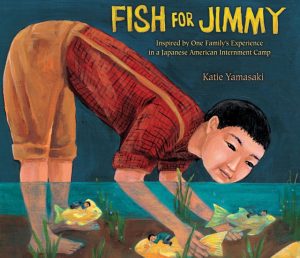
“Fish for Jimmy”

#SonOfJae reviews “Fish for Jimmy.” Katie Yamasaki’s beautiful book is based on her family’s real-life experiences and has been selected to be included in the newest version of McGraw-Hill Education’s anthology textbook for fourth grade students. 

“Somehow 18” (어쩌다 18)

Some might say that there is no way that a young man who looks like Choi Min-Ho (of the idol group SHINee) — even if he’s wearing glasses and having a bad-hair day — would be bullied. But what I liked about this casting was that it reinforces the point that no one is immune from being harassed. And no one is immune from being depressed and wanting to end their lives.

“Fight for My Way” (쌈 마이웨이)

One of the things I enjoy about Korean dramas is that many tend to focus of the main characters’ childhood friendships and how that camaraderie evolves into their adulthood. Such is the case here, where four friends grow up with each other and, eventually, end up falling in and out of love with each other.

Go Away With … Min Jin Lee

New York Times best-selling author Min Jin Lee spent four years in Japan doing research on her sweeping novel, “Pachinko” (Grand Central Publishing, $27), which was a National Book Award finalist. The time spent overseas provided valuable insight for the New Yorker, who “was based in Tokyo, but I traveled often to Kyoto and Osaka. I had to research Osaka extensively, because so much of ‘Pachinko’ was set there.”

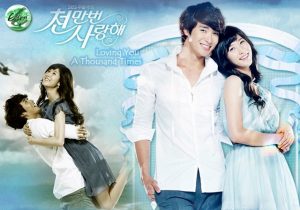
“Loving You a Thousand Times” (천만번 사랑해)

The heroine of this Korean drama is the epitome of a long-suffering doormat, whose life would’ve been so much better if she grew a spine and stood up for herself. Instead of being guilted into giving up her hard-earned money — that she had ear-marked for returning to college — to her ungrateful older half-sister, who is “studying” overseas in the United States; or giving up her own body, so that she can pay for her father’s surgery; or letting virtually everyone treat her like a servant … Eun-Nim just swallows her pride and accepts it as her life.

“Way Back Home” (집으로 가는 길)

The first Korean film to be shot in the Caribbean, “Way Back Home” was shot in a real women’s prison, with some of the actual guards and detainees serving as background characters. The filmmakers clearly believe that while Jang Mi-Jeong (the woman on whom the movie is based) may have been guilty, her crime was less egregious than the way the Ministry of Foreign Affairs handled her case.

“Boys Over Flowers” (꽃보다 남자)

I had a difficult time reconciling myself with the fact that I enjoyed “Boys Over Flowers,” while being disgusted that the showrunners never addressed how cruel the main characters were to kids outside of their circle.

“Big” (빅)

Let’s cut to the chase: the plot revolves around a high school student and a doctor who switch bodies after an accident. Yoon-Jae, the 30something doctor is in a vegetative state in the body of 17-year-old Kyung-Joon. Meanwhile, the teenager is alive and well, but he is trapped in the buff body belonging to Gong Yoo, er, I mean Yoon-Jae. Caught between these two is Gil Da-Ran, a wet dishrag of a woman, who (despite her beauty) has absolutely no confidence in herself. When she realizes that Yoon-Jae really isn’t Yoon-Jae and that it may take a while for the two to switch bodies again, she plays along with the charade.

“Weightlifting Fairy Kim Bok-Joo” (역도요정 김복주)

If I were to rate this series, I would give it a 👎 for the first half. But the second half … wow. It was worth sitting through eight hours of meh to get to the satisfying ending. Bok-Joo is the top female wrestler at her school. In order to give the other women on her team a chance of medaling, her coach asks her to go up a weight class. The 5-foot-9 athlete weights roughly 127 pounds and must go up by about 10 pounds. Bear in mind that by U.S. standards, she would be considered thin. But much is made of the fact that she’s a big, overweight girl.

“Goblin: The Lonely and Great God” (쓸쓸하고 찬란하신 도깨비)

There are few things in life that would be more difficult than to watch generations of loved ones grow old and die, while you live on for centuries without them. Such is the case with Kim Shin, a dokkaebi (goblin). For more than 900 years, he has been cursed to live a life of loneliness as atonement for all the enemies he killed during his days as an unbeatable general. Yes, his victims would’ve slain him if they had the opportunity. But, as God says in the narration, they were all precious creations, as well.

“Cinderella and Four Knights” (신데렐라와 네 명의 기사)

There are a some really great moments in “Cinderella and Four Knights.” But there was an element that made me uncomfortable. When we meet the female lead, she is not yet 18 and is a few months away from her high school graduation. It’s vague how old the Knights are, but since they are all clearly out of college, I’d guesstimate that they range from mid to late 20’s. Ten years isn’t a big difference when you’re a 30-year-old dating a 40something. But when one half of the duo is 17 … I don’t know. It just detracted from my enjoyment of the series.

“The Heirs” (왕관을 쓰려는자, 그무게를 견뎌라-상속자들)

I always viewed “The Heirs” as a much-better followup to “Boys Over Flowers.” Park Shin-Hye and Lee Min-Ho share amazing chemistry as the lead couple.

“Uncontrollably Fond” (함부로 애틋하게)

What would you do if you knew that you had three months left to live? Would you spend it with the ones you love, or would you try to right the wrongs in which you played a part? That’s the dilemma for Korea’s top Hallyu star Joon-Young, who is dying. I don’t feel bad about revealing this bit of information, because it’s revealed early on in this series.