“Yumi’s Cells” (유미의 세포들): Season 1

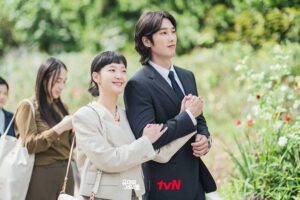
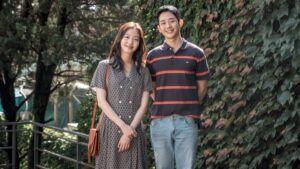
Yumi is a woman in her early thirties, who had spent most of her twenties with a man who used her financially, cheated on her and then left her after seven years together. She viewed those as wasted years and, in some ways, is correct. Doting on a partner who doesn’t value you is nothing to be proud of. But there’s also something to be said for learning from negative experiences.

“My Liberation Notes” (나의 해방일지)

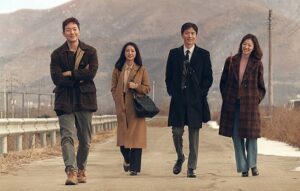
“My Liberation Notes” is very beautifully executed in presenting a slice of life that doesn’t offer a fairy-tale ending … or offer finite solutions to ease the characters’ lives. But what this K-drama does do is allow for growth. Who the characters are at the start of the series is not who they are by the finale, and that’s a good thing.

“Thirty-Nine” (서른, 아홉)

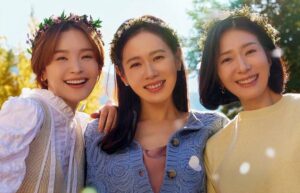
“Thirty-nine” is a reminder that while we’ve all made mistakes in our lives, we can’t continue to punish ourselves forever. Life is short. There is no guarantee of a tomorrow. Be honest and live your best life.

“Twenty-Five Twenty-One” (스물다섯 스물하나)

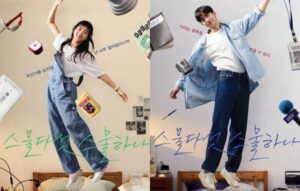
The burgeoning romance in “Twenty-Five Twenty-One” is based on a strong friendship. But some viewers have pointed out that the story would’ve been more effective if the female lead character hadn’t been underage when they met.

“The King: Eternal Monarch” (더 킹: 영원의 군주)

“The King: Eternal Monarch” was Lee Min-Ho’s comeback drama after finishing his mandatory military service in 2019. Beautifully shot and well acted by the lead actors, the series nonetheless is a bit of a hot mess when it comes to the meandering plot.

“The Hymn of Death” (사의 찬미)

“The Hymn of Death” is a bittersweet three-hour mini-series that tells the real-life story of Yum Sim-Deok — Joseon’s first soprano — and Kim Yoo-Jin, a renowned writer and playwright. Set during the period when Korea was under Japanese rule, the tragic story is familiar to many Koreans. 

“Silenced” (도가니)

Based on Gong Ji-young’s 2009 novel, “Silenced” is a brutal look at the systematic torture of children at a facility for the hearing impaired. Though Gong’s book is fictional, the stories she tells are based on the decades of real-life abuse that handicapped students endured at the Gwangju Inhwa School for the Deaf.

“The Way Home” (집으로)

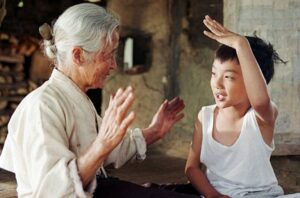
“The Way Home” is a bittersweet film about a young Seoul boy who is forced to spend the summer with his grandmother, who lives in the countryside. It’s not a quaint rural area that rich folks like to vacation in. Rather, it’s a small village where the bus comes on a irregular schedule and an angry cow chases little children.

“Hellbound” (지옥)

Director Yeon Sang-Ha (“Train to Busan”) adapted “Hellbound” from his own webtoon of the same name. He makes it clear that cults are the true sinners, which manipulate people’s lives with fear. And that hell isn’t necessarily a place foreign to us, because it’s where we may already be living. 

“D.P.” (디피)

The superb “D.P.” is not an easy series to watch. While not as gory as “Squid Game,” it’s more disturbing in many ways, because it deals with South Korea’s real-life mandatory military duty — which requires every able-bodied Korean man to enlist for approximately two years.