“Crash Landing on You” (사랑의 불시착)

A couple months after the series finale aired, I still find myself missing the characters in the superb K-Drama, “Crash Landing on You.”
Journalist, Author & Syndicated Columnist
A couple months after the series finale aired, I still find myself missing the characters in the superb K-Drama, “Crash Landing on You.”

“Let’s Eat” offers some of the best mouth-watering food scenes I’ve ever seen in any series. But is there more?
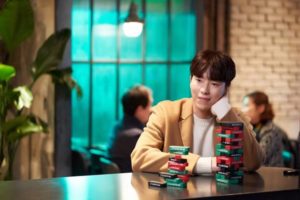
What “My Holo Love” gets across is that people are lonely and long for human companionship.
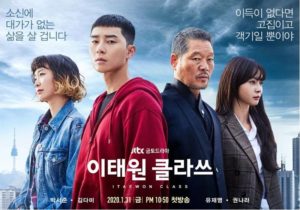
“Itaewon Class” is one of those rare K-Dramas where I disliked both female leads for different reasons. But it just goes to show that a good series doesn’t need a loveline to hold the viewer’s interest.
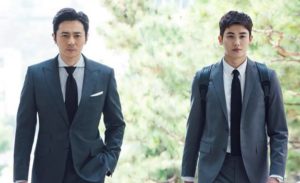
The Korean adaptation of “Suits” is an exciting series that shows off Park Hyung-Sik’s acting range and beautifully expressive face.

Jung Hae-In’s adventures in New York are delightful to watch. Here’s hoping he does another season. I know his international fans would love to travel with him vicariously to explore South Korea next.
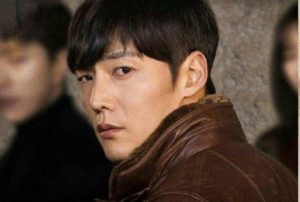
Like many of the characters in this series, Gwang-ho is a bit of an idiot. Instead of quietly sneaking up to nab the various culprits, he constantly yells out his plans to catch the 새끼/saekki (or son of a bitch), giving the aforementioned 새끼 plenty of time to escape.

BTS has done its share of guest spots that follow the standard routine: perform a song and then sit on the sofa chatting about what American food they like. But ever since their appearance last May on “The Late Show with Stephen Colbert,” some American variety shows have gone out of their way to make things more unique.
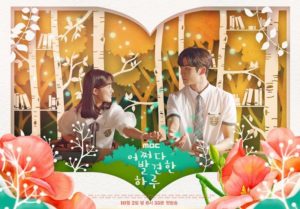
The overall message of “Extraordinary You” is that we are all extraordinary in our own way. At first, Dan-Oh simply wanted to be the star of the series. But she grew to realize that what she really wanted was to have ownership of her life, rather than following others’ expectations of who she should be.

“Chicago Typewriter” takes place in modern-day Seoul, but some of the best storytelling occurs during flashbacks to the 1930s, when Korea was under Japanese occupation. There, we learn about three resistance fighters whose lives and friendship will set the tone for the 21st Century arc.
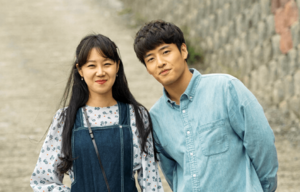
“When the Camellia Blooms” starts off with so many things happening at once that it’s initially difficult to focus on all the different story arcs: a serial killer, small-town pettiness, marital issues and the possibility of romance. But as the series progressed, each consecutive episode found its focus and finished with a sweet and satisfying finale that felt true to the characters. There is death and sadness dotted throughout the series. But at its core, “Camellia” is a story of love — not just between a man and a woman, but between parents and their children.
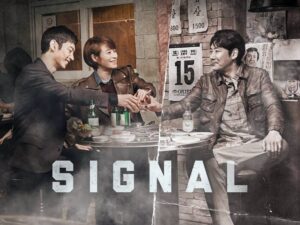
“Signal” makes you ponder the consequences of altering life. Is it fate for a person to die at a certain time, no matter how horrific that death might be? And knowing that saving someone’s life in the past could create catastrophic results in the future, would you still take that chance?
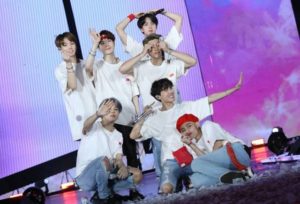
The finale of “Bring the Soul” coincides with the end of the European leg of BTS’ 2018 “Love Yourself” world tour. Each member is given his moment in the spotlight, but this episode was almost a coming-of-age tribute to Jungkook (who had just turned 21 on tour).

The saving grace of “Come and Hug Me” is that it drives home the point that bloodlines don’t define who you are or who you will become — and that just because you passed your DNA onto a child, that doesn’t make you a good parent.

“Someone said seeing BTS was like seeing a unicorn,” RM says in this fifth episode of “Bring the Soul.” “When you think about it, no matter what’s happening behind the stage, just showing our faces is a remarkable experience for some people.” In other words, the group is well aware that there are fans all over the world who will never get the chance to attend a BTS concert. They know that the ones who did manage to snare a ticket often had to go through a Hunger Games-like ordeal to purchase it. For that reason, the group strives to be perfect, to give each show 110% and to perform through their injuries when possible, even when they’re advised not to.

“My Ahjussi” is a satisfying K-Drama focusing on Dong-Hoon, a mid-level engineer who lives a mundane life. He works hard, hangs out with his brothers every evening and goes home to a house where his wife is rarely there. And if she is, she holes away in her home office and ignores him. It can’t be a coincidence that the set designer chose an apartment complex that looks more like a prison than a home for their residence.

There have been countless think pieces on who will be the next BTS or how someone could create the next BTS. This is an irrational concept, because what they essentially are saying is, “How do we conjure up another group that gets this much press and makes this much money?” If money was all BTS was after, they could retire now and be set for life. But what drives them is the relationship they have with each other and their knowledge of the influence they have on others, which can be channeled into a greater good.

“Search: WWW” is the only K-Drama I can think of where women had the kind of lead roles that ordinarily would’ve gone to men. The female characters not only were the rainmakers where they worked, they were the decision makers who the men followed.
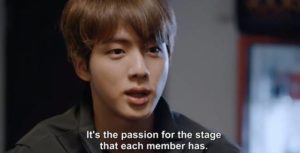
More so than any episode from last year’s “Burn the Stage” (or the first episode of this series), viewers can see how lonely life on the road can be. The seven-man group may smile on stage and charm their interviewers with witty quips and soundbites. But touring can wear them down, even when they know they are in a privileged position that many are envious of.

In the first episode of BTS’ latest docuseries “Bring the Soul,” the group’s leader RM discusses how they fit into their role as superstars. “There are things I can change and things I can’t,” he says. “But I’m doing well now the way that I am.”