“Misaeng” (미생)

What “Misaeng” does so very well is that it depicts how difficult life can be when everything is stacked against you, and you begin to believe that you don’t deserve more than the scraps people are willing to throw at you.
Journalist, Author & Syndicated Columnist
What “Misaeng” does so very well is that it depicts how difficult life can be when everything is stacked against you, and you begin to believe that you don’t deserve more than the scraps people are willing to throw at you.

“It’s Okay to Not Be Okay” is an unconventional love story that also focuses beautifully on mental health. It depicts how the aftermath of abuse and abandonment affects the psyche, but reaffirms that no one is a lost cause — and that seeking help is self love.

“Prison Playbook” is a dramedy I never wanted to watch. But I’m so glad I did, because it handled social injustice in a way that was palatable to digest, while offering a satisfying ending.

The serial killer element of “Abyss” is intriguing and holds your interest, even though it’s clear from the get-go who the murderer is. There is an accomplice. While you won’t be 100 percent sure who that might be, your first guess is probably correct.

“Extracurricular” shows so much promise early on, before meandering into a series of violent vignettes that water down the plot.

“Train to Busan” does a great job at depicting how people deal with death during unthinkable times. When your loved one is infected and your only option is to perish (as human beings) with them or kill them so that you (and others) can survive, what would you do?

“Parasite” has already made history for South Korea as the country’s first film to win a Best Picture Academy Award. There are some moments I can’t wrap my head around though, and one of them was the inclusion of Illinois State into the dialogue.

A couple months after the series finale aired, I still find myself missing the characters in the superb K-Drama, “Crash Landing on You.”

“Let’s Eat” offers some of the best mouth-watering food scenes I’ve ever seen in any series. But is there more?
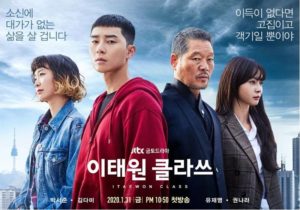
“Itaewon Class” is one of those rare K-Dramas where I disliked both female leads for different reasons. But it just goes to show that a good series doesn’t need a loveline to hold the viewer’s interest.

Jung Hae-In’s adventures in New York are delightful to watch. Here’s hoping he does another season. I know his international fans would love to travel with him vicariously to explore South Korea next.

Like many of the characters in this series, Gwang-ho is a bit of an idiot. Instead of quietly sneaking up to nab the various culprits, he constantly yells out his plans to catch the 새끼/saekki (or son of a bitch), giving the aforementioned 새끼 plenty of time to escape.

The overall message of “Extraordinary You” is that we are all extraordinary in our own way. At first, Dan-Oh simply wanted to be the star of the series. But she grew to realize that what she really wanted was to have ownership of her life, rather than following others’ expectations of who she should be.

“When the Camellia Blooms” starts off with so many things happening at once that it’s initially difficult to focus on all the different story arcs: a serial killer, small-town pettiness, marital issues and the possibility of romance. But as the series progressed, each consecutive episode found its focus and finished with a sweet and satisfying finale that felt true to the characters. There is death and sadness dotted throughout the series. But at its core, “Camellia” is a story of love — not just between a man and a woman, but between parents and their children.
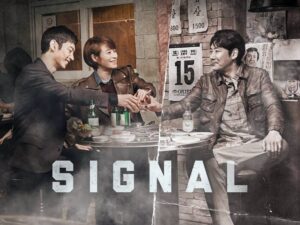
“Signal” makes you ponder the consequences of altering life. Is it fate for a person to die at a certain time, no matter how horrific that death might be? And knowing that saving someone’s life in the past could create catastrophic results in the future, would you still take that chance?

The saving grace of “Come and Hug Me” is that it drives home the point that bloodlines don’t define who you are or who you will become — and that just because you passed your DNA onto a child, that doesn’t make you a good parent.

“My Ahjussi” is a satisfying K-Drama focusing on Dong-Hoon, a mid-level engineer who lives a mundane life. He works hard, hangs out with his brothers every evening and goes home to a house where his wife is rarely there. And if she is, she holes away in her home office and ignores him. It can’t be a coincidence that the set designer chose an apartment complex that looks more like a prison than a home for their residence.

“Search: WWW” is the only K-Drama I can think of where women had the kind of lead roles that ordinarily would’ve gone to men. The female characters not only were the rainmakers where they worked, they were the decision makers who the men followed.

“One More Time” was Kim Myung-Soo’s first lead role. Best known to K-Pop fans as L from the group Infinite, he certainly had the look of a singer-songwriter-guitarist down pat. With a better script and direction, he could’ve really done something with this part. But as it was, Tan was an unsympathetic character who was old enough to be responsible, but too immature to give up his rock ‘n roll lifestyle to pay off his considerable debts.

Hotel del Luna is a gorgeous five-star hotel that only accepts dead souls, before they move onto heaven or hell. Yeo plays a Harvard-educated hotelier who is forced to work at the eponymous establishment, due to an agreement his father had made years ago. His boss is the otherworldly Mal-Wol, who has run Hotel del Luna for the past 1,300 years. She is neither dead or alive, but can’t peacefully enter the afterlife until she has settled her personal business on earth. Though the pair’s relationship starts off contentiously, they slowly fall in love and feel they are tied together by a force that can’t be explained.