BTS Gets Real with “Let’s BTS”

Let’s get real. BTS doesn’t need to do much promotion these days. But knowing that their fans are missing them big time, the septet have gifted ARMY with a special talk show called “Let’s BTS.”
Journalist, Author & Syndicated Columnist
Let’s get real. BTS doesn’t need to do much promotion these days. But knowing that their fans are missing them big time, the septet have gifted ARMY with a special talk show called “Let’s BTS.”

If you like kimchi slaps, switched at birth and secret identity storylines, you just might be a makjang fan!

“Like Bruce Lee once said, you need to be like water,” said MMA champion turned actor Georges St-Pierre. “I believe the best fighters and the best actors are very good at adapting at any situation they are faced with.”

“My wife and I were scheduled to go to Barcelona for our anniversary and we were so excited, but we had to push our dates back due to the pandemic,” said “Blue Bloods” actor Mark McKinnon. “Hopefully, we will be able to take the trip (this year).”

The New York Times interviewed me for their piece about product placement (like Subway!) in K-Dramas.

“Sweet Home” has some incredible highs. But unlike “Kingdom” or “Uncanny Counter,” where action supplements the storyline, “Sweet Home” has too much mediocre filler to make it a truly great K-drama.

“Food is such an insight into the local flavor, the local scene,” said 3 Pairs of Boots vocalist Laura Arias. “It gets one quickly into the vibe of a place.”

Happy International Women’s Day to the cast of “The Penthouse 2.” These amazing actresses prove that you don’t need a Second Lead Syndrome — or any kind of romance — to keep viewers coming back for more.
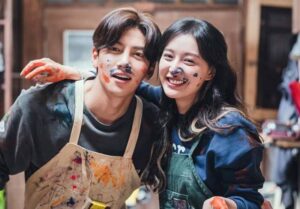
Most of the characters in “Lovestruck in the City” would’ve benefited with some therapy to work things through and move on from unhealthy relationships that should’ve been severed early on.

Like “Train to Busan,” “Kingdom” was released well before the coronavirus outbreak cause pandemonium worldwide. Both are sociopolitical projects disguised as zombie horror thrillers, where those in power don’t try to prevent the outbreak, so much as they try to stop news of the outbreak from being released. The public’s ignorance suits their own needs.

Celebrities are like all of us. When we’re hungry, we can’t function. But Korean celebs are extra when it comes to eating — it seems like they’re starring in their own mukbangs.

Comedy Central founder Art Bell says that Denali National Park and Preserve in Alaska is a wonderful vacation spot: “Because cars weren’t allowed in the park, we had to take a four-hour bus ride to get there. We hiked every day, avoided a confrontation with a grizzly bear and met some remarkable people. The view of Denali mountain was spectacular.”

There are several subplots percolating in “Run On,” but the most interesting was the bullying, especially in light of the accusations of real-life bullying scandals surrounding idols and actors. This K-drama offers a perspective that bullying is a part of Korean hierarchy, and those with wealthy and powerful parents won’t be punished. Those who are poor and powerless won’t get justice.

In this op-ed, writer Jae-Ha Kim unpacks the racist comments of German radio host Matthias Matuschik towards Korean band BTS in the larger context of the rise in violence toward Asian people globally. Content warning for discussions of racism and use of a quoted slur.

Because Korea has a long and complicated history with the purity of bloodlines and a general disdain for adoptees, I had always found it strange that so many Korean dramas dealt with issues that the mainstream media was reticent to cover. But in some ways, K-dramas can be very progressive in covering touchy topics. Hopefully, seeing orphans and adoptees depicted simply as children who deserve to be loved and cared for — like any child — is helping to lessen the stigma of kids whose biological parents are no longer in their lives.

“The Penthouse” got a lot of notoriety because of screenwriter Kim Soon-Ok’s makjang storylines, which were both a lot of fun and over the top. That said, there are plenty of other Korean dramas that hold their own when it comes to being overly dramatic (in a good way).

“I am very lucky to have never faced racism in my life, though I have seen it,” said actor Jesse Posey. “Selena did face racism, but she also faced the troubles of being a big star. And piling those two on top of each other must have been a great challenge.”

“I remember taking the segregated train with my sister and our father from Montgomery to Atlanta.” said Martin Luther King Jr.’s goddaughter, Donzaleigh Abernathy. “I remember the train ride, the dirty ‘colored only’ bathroom and Uncle Martin and (his daughter) Yolanda picking us up at the beautiful old train station in Atlanta, which has been torn down.”

Who else screamed when Lara Jean and Peter signed a love contract for their pretend relationship and then actually fell in love? Hello?! This is K-drama Trope 101!

Lee Isaac Chung is an astute filmmaker, who pays close attention to the smallest details. With “Minari,” he has created a universally relatable film, while inserting elements that are specifically Korean.