By Jae-Ha Kim
Substack (.pdf)
February 28, 2026
In another edition of You’re Not Korean Enough, we have a contingent of cruel and clueless people on the internet who are taking a Korean adoptee to task for not being a real Korean. Why? Because she initially mispronounced the name of a Korean folk song, “Arirang” (아리랑).
Are you done rolling your eyes yet? Because I’m not.
A few days ago, Kat Turner made an informative video explaining the significance of the Korean folk song “Arirang” as it applies to her. Thanks to BTS annoucing that Arirang is the title of the group’s highly-awaited comeback album, “Arirang” has become a buzzword that is being dissected on social media. What could the significance of Arirang possibly mean? For me, it is a hint that the septet is going back to their roots in a way that is meaningful to them. Will all of their songs be in Korean, with no English tracks? Maybe? But I’m not a soothsayer. However, I am confident that whatever they release on March 20 will be reflective of who they are today.
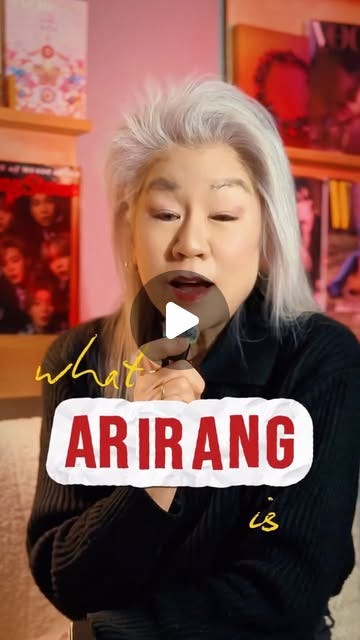
Why? Because she mispronounced the word “Arirang.”
Here’s the thing. Most people who grew up in a Korean-speaking household — whether in Korea or overseas — are familiar with the song, have sung the song, and know how to pronounce “Arirang.” But would you expect a monolingual English-speaking person to pronounce it as well as a Korean in Korea, or even a Korean American who grew up bilingual? Most likely not. So why are we expecting adoptees — most of whom grew up in white families, in the whitest locations ever (Iowa, for Turner), with no Korean community to integrate into, and who were essentially raised white to assimilate into the majority — to be able to speak Korean properly?
Perpetual Foreigner Syndrome
You know how perpetual foreigner syndrome works, right? It’s when Asian Americans are viewed as foreigners rather than U.S. nationals because we aren’t accepted as real Americans. According to a study by the PEW Research Center, almost 80 percent of Asian Americans have experienced some kind of xenophobia and racism in their lives — ranging from assumptions that we don’t speak English to being told to go back to where you came from … even if we are already there.
Yes, transnational adoptees technically came from somewhere else. Since 1953, South Korea has sent more than 200,000 children overseas to be adopted, earning the dubious distinction of being baby exporters. The majority went to the United States, while others grew up in Europe. Only a tiny fraction of adoptive parents raised their children to read and speak Korean. While it’s easy to fault the parents, it should be acknowledged that this was the norm even a couple decades ago, because that’s what experts believed was best for the child. Little thought went into the very obvious fact that a Korean child growing up in a white family is going to stick out as a foreigner, regardless of whether they speak Korean or not.
So tell me, when you remove an infant from their birth nation, and move them to another country that doesn’t share the same (or even similar) language, customs, or culture, how exactly are they supposed to retain a language that they never spoke? (I discuss this further in my review of Return to Seoul in Salon.)
It’s as ridiculous as my first grade teacher was expecting me to point out where every single Asian country was on the world map.1 I had never even gone to school in Seoul. How was I supposed to know? And yes, it was stressful for a six-year-old to be asked to do this. Though I never asked, I wondered why she wasn’t expecting my white classmates to pinpoint where all the European countries were.
Before I go further, I’m going to share some of the comments that people made to Turner. This man heard that Turner’s pronounciation was off, but told her in a way that, to me, read as trying to be helpful and kind.

Others weren’t necessarily rude, but were on the blunter side.


Here’s the thing, most of those comments weren’t helpful. They clearly knew what Turner was saying, but decided that being antagonistic was good for her without considering that it is difficult to use the English alphabet to address the Korean alphabet. It’s AriRang, you say? No it’s not. An English speaker who reads that will pronounce the second syllable as rang — as in, “You rang, ma’am?” — instead of the softer rahng.
People who grew up hearing one language can have a difficult time hearing a second language properly. Here’s an anecdote. People who do not speak Korean have tried to correct how I pronounce 엄마2 — a word I have said since infancy — because they claim that [checks notes] their dry cleaner or their local Korean grocer pronounced is as oh-ma. I do not know these Koreans who they speak of, but I can assure you that these Koreans most certainly did not pronounce the word this way. More likely, that is how these English speakers through no fault of their own heard the word. The faulty part, though, comes when they decided it was appropriate to try to school me in the most basic of all Korean words that I am very familiar with.
My own friends who are in the process of learning how to speak Korean have told me that they can’t differentiate the sounds between 오빠3, 아빠4, and 아파5. And to be honest, I don’t blame them. They can sound similar.
Do you know how you become fluent in a foreign language without a trace of your native accent? Sure, there are exceptions to any rule, but the most efficient way is to move to the country where the language you want to learn is spoken and immerse yourself by speaking it every day, surrounded by the accent you want to emulate. For instance, I speak perfect American English. Why? Because I’ve lived in the U.S. since I was very young.
How difficult is it to understand that for all intents and purposes, Korean is a foreign language for adoptees who were raised in western countries and never given the opportunity to learn their birth language? To put things into perspective, there are diehard K-pop and K-drama fans out there who have enjoyed Korean content for more than a decade. Most of them cannot speak any Korean. And that’s OK. So why is there this unrealistic expectation that adoptees would somehow find it simple to reclaim their birth language?
But hey, why consider all of that when it’s easier to be an intrusive know-it-all who lacks empathy for a marginalized community?


Turner made a second video to address some of the complaints about her pronounciation, which, again was thorough.
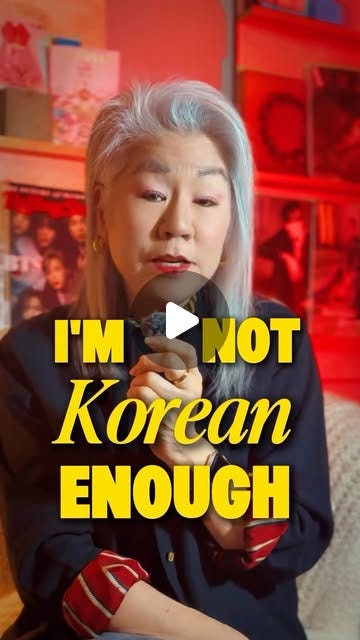


Loss of language is a profound loss of culture, something that too many of the well-actually commenters didn’t consider before venting their spleen on the internet. And without naming names, it surprised me that there are quite a few pepole who still don’t know the difference between ethnicity and nationality. I never thought I’d have to explain this on Beyonce’s internet, but you can be both ethnically Korean and a U.S. national.
I interview a lot of celebrities, including Koreans who were born in the U.S. and are therefore U.S. nationals, but moved to South Korea and permanently live there. Their English is no longer fluent. Why? Because they live in a country where Korean is spoken and have few people to speak English with.
The Rose’s lead singer Woosung, who grew up all over the world, told me that he has gotten to the point where he is no longer fluent in either Korean or English. He was exaggerating, because he is the perfect example of someone who is completely bilingual. But I understood exactly what he was saying, because language is fluid. It evolves whether you’re living in that specific country or not.
The FSI Categorizes Korean as Exceptionally Difficult for Native English Speakers

According to the U.S. State Department’s Foreign Service Institute (FSI), Korean is one of the most difficult languages for native English speakers to learn.
When white westerners try to speak Korean, they are often allotted at a least a modium of grace, because they don’t look like they should be able to speak Korean, right? Maybe it’s because haters are too willfully ignorant about the realities of adoption that they spew shit like, “Getting adopted by a white family was literally the best thing that could have happened to you” — which illustrates that the commenter below literally doesn’t know the actual meaning of the word literally.

It’s clear that this person/troll/bot doesn’t give a toot about adoptees and is just cobbling together rhetoric they’ve heard here and there, rather than doing any meaningful research. Two things can be true: you can have a good life with your adoptive parents, and you can still carry generational trauma from losing your first family. While well-meaning people congratulate westerners for adopting their kids, what most don’t know or even think about is that adopted children are more likely to experience anxiety and PTSD than children who weren’t adopted. And adoptees are also four times as likely to attempt suicide than kids who grew up with biological parents.
So when someone says, “Getting adopted by a white family was literally the best thing that could have happened to you,” it reeks of white saviorism, xenophobia, and willful stupidity.
After responding to a few of her detractors, Turner said she decided to stop. It is hurtful to read comment after comment intent on erasing a rightful part of her identity.
“I think ultimately, the emotion I felt the most was sadness that humans are capable of treating other humans in such a way over the pronunciation of a word,” Turner told me. “The only thing I present myself as an authority on is my own experience as a K-adoptee. And how many times did I say I didn’t have access to my language? In what way am I supposed to show more humility?”
Earlier this past week, I interviewed a well-known Korean American woman who asked me, “When you are attacked online, what do you do? Do you get sad, or maybe angry? How do you deal with it?” I thought about it, and the truth is that I get both sad and angry. Most of the time, I say nothing to defend myself because that only ramps up their hatred. There is no reasoning with people who know they are lying, but don’t care. But I told her that what I do for myself is that I write about it, not necessarily for others to read, but because I want a record of their hate on my own terms.
Everything lives on forever online, right?

I don’t ordinarily shame people for not speaking English well, regardless of whether they are native English speakers or learned it as a foreign language. But I am not here to be your shit catcher. And for the record, I am the first one to say that I’m always surprised at how my Korean skills are simultaneously really good and really bad. (Diaspora may relate to this feeling.) While I maintain my uncontested status as the Queen of Typos™, I can hold conversations and conduct on-the-record interviews in grammatically correct Korean and English. I know for a fact that people like her cannot.6
FWIW, she deactivated after my final response. Score one for this Maudlin Crone.7*
I am working on a long-form reported newsletter that I hope to publish in the upcoming weeks. I hope you will look forward to it.
ETA: In which I’m mentioned in the same reel8 as the iconic Pachinko author Min Jin Lee.
View this post on Instagram
1 A reminder: I am not an adoptee.
2 엄마 means mother.
3 오빠 is what a younger sister calls her older brother.
4 아빠 means dad.
5 아파 means hurt/pain.
6 Whether any of us like it or not, English is the world’s No. 1 international (and dominant) language. If you can speak fluent, unaccented English, that is a huge asset in the South Korean job market, which is why many parents try to send their children to study in the U.S., England, and Australia. In the U.S., being able to speak Korean is an advantage, but not to the same extent as being fluent in Spanish.
8 ETA on March 11, 2026. Kat Turner asked if it would be OK to include some of our messages to each other in her latest reel. I was happy to oblige.
I don’t like adoptees.
This is a bot account or a pick-me girl. Either is annoying. Ignore.
Translated from Japanese
A column about how overseas adoptees were criticized as “not Korean enough” for mispronouncing “ARIRANG”
A question about measuring “authenticity” based on a single pronunciation. Reading that, I, as a NamPen, recalled that day’s NamJoon.
During the Q&A at the press conference, when a foreign reporter said, “I’m sorry for my bad Korean pronunciation,” Namjoon replied, “Thank you for greeting me in Korean. Please don’t say you’re bad at it.”
Someone who doesn’t measure by correctness, but respects courage. Someone who gently wraps you up with kind words. Language ability is not equal to identity, the person who conveyed everything with that one word.
More than pronunciation, I don’t want to forget the feeling of wanting to speak. That’s why I truly take pride in Namjoon from the bottom of my heart. And I’m glad that I can love someone like that.
Translated from Japanese
A Korean adoptee woman is getting slammed online just for mispronouncing “Arirang.” A column by a Korean-American journalist who pushed back against that.
I think it’s the pain that the entire second generation and beyond of the Korean diaspora carries.