“Prison Playbook” (슬기로운 감빵생활)

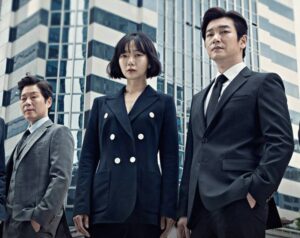
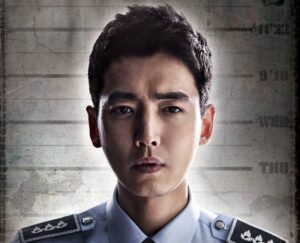
“Prison Playbook” is a dramedy I never wanted to watch. But I’m so glad I did, because it handled social injustice in a way that was palatable to digest, while offering a satisfying ending.

“Hospital Playlist” (슬기로운 의사생활): Season 1

The masterminds behind the superb “Reply” anthology produced another hit series with “Hospital Playlist,” centering around a quintet of long-time friends who are all doctors for the same prestigious hospital.

“Hyena” (하이에나)

“Hyena” shows that being called the best doesn’t mean anything in the real world. The plot depicted South Korea’s insidious system of revering lineage as flawed (and stupid). And that referring to a human being as disposable — because they don’t hail from the proper background — depicts who exactly is the human garbage here.

“When the Weather Is Fine” (날씨가 좋으면 찾아가겠어요)

Park Min-Young and Seo Kang-Joon are both skilled actors, whose expressions convey the complicated emotions their characters have. Neither had an easy life and they are almost fearful of expecting — or even wanting — more than what they have.

“Itaewon Class” (이태원 클라쓰)

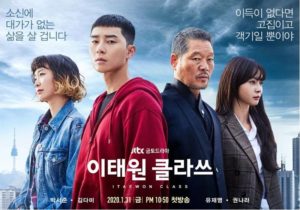
“Itaewon Class” is one of those rare K-Dramas where I disliked both female leads for different reasons. But it just goes to show that a good series doesn’t need a loveline to hold the viewer’s interest.

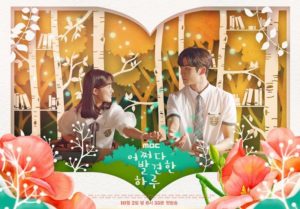
“Extraordinary You” (어쩌다 발견한 하루)  

The overall message of “Extraordinary You” is that we are all extraordinary in our own way. At first, Dan-Oh simply wanted to be the star of the series. But she grew to realize that what she really wanted was to have ownership of her life, rather than following others’ expectations of who she should be.

“Chicago Typewriter” (시카고 타자기)

“Chicago Typewriter” takes place in modern-day Seoul, but some of the best storytelling occurs during flashbacks to the 1930s, when Korea was under Japanese occupation. There, we learn about three resistance fighters whose lives and friendship will set the tone for the 21st Century arc.

“BTS: Bring the Soul”: Episode 5

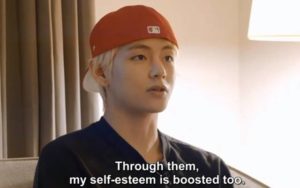
“Someone said seeing BTS was like seeing a unicorn,” RM says in this fifth episode of “Bring the Soul.” “When you think about it, no matter what’s happening behind the stage, just showing our faces is a remarkable experience for some people.” In other words, the group is well aware that there are fans all over the world who will never get the chance to attend a BTS concert. They know that the ones who did manage to snare a ticket often had to go through a Hunger Games-like ordeal to purchase it. For that reason, the group strives to be perfect, to give each show 110% and to perform through their injuries when possible, even when they’re advised not to.

“My Ahjussi” (나의 아저씨)

“My Ahjussi” is a satisfying K-Drama focusing on Dong-Hoon, a mid-level engineer who lives a mundane life. He works hard, hangs out with his brothers every evening and goes home to a house where his wife is rarely there. And if she is, she holes away in her home office and ignores him. It can’t be a coincidence that the set designer chose an apartment complex that looks more like a prison than a home for their residence.

“BTS: Bring the Soul”: Episode 2

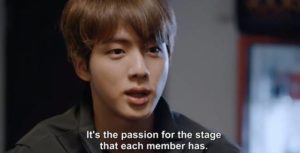
More so than any episode from last year’s “Burn the Stage” (or the first episode of this series), viewers can see how lonely life on the road can be. The seven-man group may smile on stage and charm their interviewers with witty quips and soundbites. But touring can wear them down, even when they know they are in a privileged position that many are envious of.

“Love Alarm” (좋아하면 울리는): Season 1

As a young woman passes by two men, an app on her phone goes off. “There is one person who loves you,” it says. The app is called JoAlarm (좋알람), which alerts users if there is someone within 10 meters who loves them. If you’re thinking that JoAlarm sounds nonsensical, you’re right — in English, it doesn’t make sense. But in Korean, it literally means an alarm to measure if someone likes your. (Remember that Jay Park song, “Joah”/”좋아”? 좋아 means good or to like. Now it makes perfect sense, right?)

“One Spring Night” (봄밤)

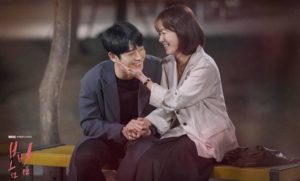
It’s not surprising that “One Spring Night” has the same melancholy vibe as “Something in the Rain” (aka “Pretty Noona Who Buys Me Food”). Besides the same leading man, the series reunites screenwriter Kim Eun and director Ahn Pan-Seok. While the storyline is different, the main thrust remains the same: The central male character is deemed as unsuitable to be with the female character, because of an unforgivable character flaw that isn’t a flaw at all.

“My First First Love” (첫사랑은 처음이라서): Season 2

I knew going into this series who she would end up with (and so will you, because you’re not stupid). I have no problem with that. But what I thought was a cheap cop-out was the way Do-Hyun went from being an upstanding, fun and thoughtful young man in the first season, into a suspicious and jealous boyfriend in this second season.

“Love in the Moonlight” (구르미 그린 달빛)

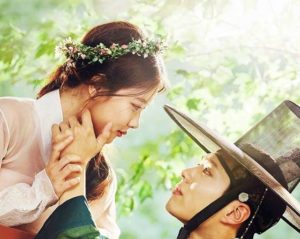
Second lead syndrome is strong in “Love in the Moonlight.” And although it’s obvious from the beginning who will end up with the girl, I honestly would’ve been fine with either. Are you #TeamBoGum or #TeamJinYoung?!

“My First First Love” (첫사랑은 처음이라서): Season 1

Five friends, four of them living together in one house. It becomes clear early on that the writers are setting up the premise for the roomies to pair off romantically. But because this is a K-Drama, there’s a hitch and, in this case, it’s the fifth friend who lives at home with his hard-working father. (Less of a storytelling inconvenience is a snooty rich girl who dates the male lead.)

“The Crowned Clown” (왕이 된 남자)

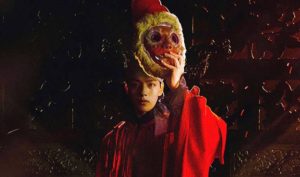
A serialized remake of the 2012 film “Masquerade” (광해: 왕이 된 남자), “The Crowned Clown” stars Yeo Jin-goo as young, immoral king Yi Heon, whose crown is constantly under threat. Drugged out on opium (initially unknowingly, and later willingly), he eagerly agrees to allow a lookalike jester, Ha Seon, to impersonate him until things are under control. In other words, let the clown be assassinated in his place.