“Memories of the Alhambra” (알함브라 궁전의 추억)

A unique series that kept me guessing until the end, “Memories of the Alhambra” starts off with a strong, intriguing premise: A teenage videogame developer has created an addictive world of augmented reality (AR), where players interact seamlessly with medieval warriors. Gamers go to real-life places (e.g. restrooms in neighborhood bars) to acquire weapons, which are only visible to people wearing special optical lenses.
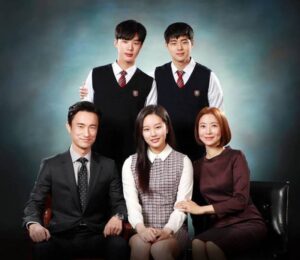

“SKY Castle” (SKY 캐슬)

Having just finished “Sky Castle,” I am left with a little lump in my throat, not because it’s over, but because I know there are so many children out there who are at the mercy of a brutal educational system — where you are told your life means nothing if you don’t get into Seoul National University, Korea University or Yonsei University.

“Mr. Sunshine” (미스터 션샤인)

Helmed by writer Kim Eun-Sook and director Lee Eung-Bok — who previously collaborated together on “Descendants of the Sun” and “Goblin: The Lonely and Great God” — the misleadingly named “Mr. Sunshine” does a beautiful job of juggling multiple story lines that are full of suspense, intrigue and achingly quiet romance.

“My Secret, Terrius” (내 뒤에 테리우스)

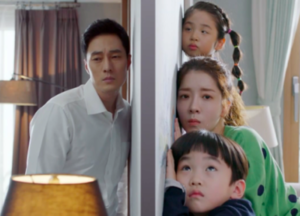
A spy and a widowed housewife become embroiled in espionage, kidnapping and murder. But it’s not all thrills in this breezy series (also known as “Terius Behind Me”), which offers comic relief in the form of an apartment complex full of nosy neighbors, who are almost as skilled in ferreting out secrets as the secret agents.

“The Smile Has Left Your Eyes” (하늘에서 내리는 일억개의 별)

A remake of the 2002 Japanese TV series, “Sora Kara Furu Ichioku no Hoshi,” “The Smile Has Left Your Eyes” wasn’t nearly as subversive as the original, which had almost no moral compass (incest, murder, underage sex). A Korean film could’ve tackled those topics. But I knew there was no way a primetime Korean drama would delve too much into the seamier aspects of society.

“It’s Okay, That’s Love” (괜찮아, 사랑이야)

“It’s Okay, That’s Love” is sold as a wacky K-Drama about a psychiatrist and a playboy celebrity author. And the first couple episodes did little to disprove that storyline. But as it progressed, the series laid out the plot in a beautiful, languid way that was full of love and heartbreak, before culminating in the kind of glorious truth that is both liberating and intoxicating.

“Because This Is My First Life” (이번 생은 처음이라)

“Because This Is My First Life” is a bittersweet series about two broken people who decide to cohabitate for financial reasons. It is also a story that is heartwarming, funny and romantic. The melancholy start to this Korean drama gave me the same feels as “Pretty Noona Who Buys Me Food” (in a good way).

“School 2013” (학교 2013)

I watched this series, because I was curious to see how well Lee Jong-Suk acted early on in his career. Answer: He was very good, even in a so-so K-Drama. “School 2013” tackles many serious topics — bullying, suicide, overbearing parents — but if you want to watch a superior film about Korean high school students, opt for “Once Upon a Time in High School.”

“While You Were Sleeping” (당신이 잠든 사이에)

One of the things that I really love about Korean dramas is that many of them center around protagonists who knew each other as children — and reunite as adults. And such is the case with “While You Were Sleeping,” which follows a group of young adults who inexplicably see each other in their dreams.

“Pinocchio” (피노키오)

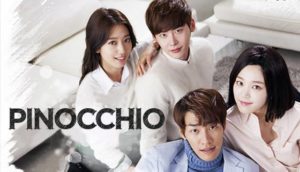
I was going to review “Pinocchio” simply as I would any other K-Drama. But I started to write this at the same time that Soon-Yi Previn broke her silence about her relationship with Woody Allen (her husband) and Mia Farrow (her adoptive mother, and Allen’s former long-time girlfriend) — and that affected my take on this Korean drama. Is it wrong for family members who aren’t biologically-related to have a romantic relationship? If you condemn Allen and Previn, can you condone the two lead characters in this series?

“I Hear Your Voice” (너의 목소리가 들려)

I finished watching “I Hear Your Voice” around the same time that I started “Pretty Noona Who Buys Me Food.” Both deal with older women/younger men plots, where the woman is about eight years older than her partner. The problem I had with “I Hear Your Voice,” though, is that the boy is a high school senior when the relationship begins. And while Soo-Ha certainly is more mature than Hye-Sung in many ways, he is still a teenager.

“Pretty Noona Who Buys Me Food” (밥 잘 사주는 예쁜 누나)

“Pretty Noona Who Buys Me Food” is sold as a May-December romance. That may be one reason I wasn’t eager to watch this series. While the central storyline delves into the relationship between the pretty noona and her childhood friend’s younger brother, the most compelling subplot — that wasn’t really fleshed out — was workplace sexual harassment. By the way, this isn’t a May-December romance.

“What’s Wrong with Secretary Kim” (김비서가 왜 그럴까)

There’s very little wrong with the chemistry in the Korean series, “What’s Wrong with Secretary Kim.” The attraction between the main characters is so strong that (of course) the off-screen dating rumors have surfaced. Both Park Seo-Joon and Park Min-Young deny they are anything more than friends, but you almost can’t blame netizens for their wishful thinking.

“Healer” (힐러)

A smart, 20-episode series that was well cast, it offered intrigue, action, comedy and a bittersweet love story that ends in such a way that the viewer is left assured that the couple stays together forever. This is also one of the rare Korean dramas I’ve seen where the lead characters aren’t involved in a love triangle (though there is a sub-plot where unrequited love between secondary cast members plays a role).