K-celebs Love Mukbang!

Celebrities are like all of us. When we’re hungry, we can’t function. But Korean celebs are extra when it comes to eating — it seems like they’re starring in their own mukbangs.
Journalist, Author & Syndicated Columnist
Celebrities are like all of us. When we’re hungry, we can’t function. But Korean celebs are extra when it comes to eating — it seems like they’re starring in their own mukbangs.

There are several subplots percolating in “Run On,” but the most interesting was the bullying, especially in light of the accusations of real-life bullying scandals surrounding idols and actors. This K-drama offers a perspective that bullying is a part of Korean hierarchy, and those with wealthy and powerful parents won’t be punished. Those who are poor and powerless won’t get justice.
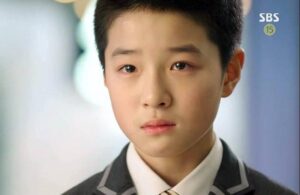
Because Korea has a long and complicated history with the purity of bloodlines and a general disdain for adoptees, I had always found it strange that so many Korean dramas dealt with issues that the mainstream media was reticent to cover. But in some ways, K-dramas can be very progressive in covering touchy topics. Hopefully, seeing orphans and adoptees depicted simply as children who deserve to be loved and cared for — like any child — is helping to lessen the stigma of kids whose biological parents are no longer in their lives.

“The Penthouse” got a lot of notoriety because of screenwriter Kim Soon-Ok’s makjang storylines, which were both a lot of fun and over the top. That said, there are plenty of other Korean dramas that hold their own when it comes to being overly dramatic (in a good way).

Who else screamed when Lara Jean and Peter signed a love contract for their pretend relationship and then actually fell in love? Hello?! This is K-drama Trope 101!

Lee Isaac Chung is an astute filmmaker, who pays close attention to the smallest details. With “Minari,” he has created a universally relatable film, while inserting elements that are specifically Korean.

While “To All the Boys” author Jenny Han may have no desire to write a fourth book in this series, wouldn’t it be fun if Kitty got a spinoff? She could move to Seoul to become a K-pop trainee, learn Korean, and reunite with her crush Dae (Jeon Ho-Young). TATB doesn’t have to end with Lara Jean and Peter. With a little bit of tweaking, it can go on always and forever.

Well written and terrifically acted, “The Uncanny Counter” is suspenseful and heartwarming. And in a rarity for Korean dramas, there is no second lead syndrome romance to mess with the plot.

“Penthouse 2” returns on Feb. 19 to continue the saga of the immoral elite who rule over Hera Palace. But what about all the cliffhangers from Season 1?!

K-pop’s CRAVITY sat down to chat about K-dramas, “Running Man” and … Lee Dong-Wook! Read our exclusive interview with the young idols right here on KOCOWA!

Some of the best K-drama characters are the ones who cause trouble, show no remorse and have zero regrets about all the chaos they’ve caused.

“Penthouse” starts off with the most makjang storyline of the year. This deliciously gripping female-centric series revolves around rival classical singers and includes a (dun dun dun!) switched-at-birth plot twist. Did I mention that one of male characters has a torture chamber in his home, because, why not? Mixed in with the outrageous content is a parable about the haves and the have nots.

Classic episodes of “Running Man” are available on KOCOWA’s LIVE.

P1Harmony recently made their K-pop debut with a single, EP and a film! Meet the boys in the band in a KOCOWA exclusive interview.

“Kairos” starts off promising and is reminiscent of the best elements of “Signal.” But where the latter kept the suspense going until the end, “Kairos” fizzles out midway, with redundant story arcs and some characters that are not only irredeemable, but highly unlikeable. And I’m not talking just about the villains.

What “Peninsula” lacks in humanity is made up with spectacular car chases and firearms. Is it as good as “Train to Busan”? No, but it’s good enough, in a Hollywood shoot-em-up kind of way.

“Start-Up” has a second male lead (Kim Seon-ho) who is so charismatic that his storyline often overshadows that of the very handsome lead (Nam Joo-hyuk). Ultimately, the K-Drama reinforces the idea that no matter how broken a family is, the ties remain – for better or worse.
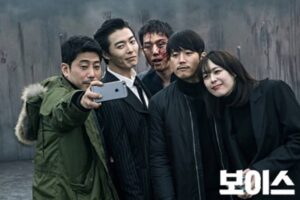
“Voice” is a gory police procedural revolving around a police officer who can solve cases with her astute hearing and the “mad dog” detective who learns to trust her instincts. Their goal is to find the serial killer responsible for killing her father and his wife.

Song Ji Hyo or Jeon So Min? Jessi or Hyori? William or Bentley? “The Penthouse” or “CHIP-IN”? Who’s your pick?

11 Best K-Dramas of 2020: Rivals, Lovers, and Slow Burning Intrigue. These shows are must-watch television. My latest for Teen Vogue.