“Hellbound” (지옥)

Director Yeon Sang-Ha (“Train to Busan”) adapted “Hellbound” from his own webtoon of the same name. He makes it clear that cults are the true sinners, which manipulate people’s lives with fear. And that hell isn’t necessarily a place foreign to us, because it’s where we may already be living. 

“D.P.” (디피)

The superb “D.P.” is not an easy series to watch. While not as gory as “Squid Game,” it’s more disturbing in many ways, because it deals with South Korea’s real-life mandatory military duty — which requires every able-bodied Korean man to enlist for approximately two years.

“Bring It On, Ghost” (싸우자 귀신아)

The series parable seems to be that if you have hate in your heart, you are susceptible to being influenced to hurt others, just because you can. “Bring It On, Ghost” started off as an uneven series. But once you get past the first couple episodes, it becomes a must-see K-drama that’s filled with action and a lot of heart.

“Racket Boys” (라켓소년단)

“Racket Boys” is a sweet series centering around a teenager, who’s forced to quit baseball when his father moves them from Seoul to the countryside. Disappointed and bitter, Hae-Kang begrudgingly joins the badminton team — which his father coaches — on the condition that if the team wins a medal, his dad will get them Wi-Fi at their house.

“Move to Heaven” (무브 투 헤븐: 나는 유품정리사입니다)

“Move to Heaven” is a beautiful and at times brutal series that tells so many touching stories. One of the most important aspects was in how the series showed respect for the dead, even when the supposed loved ones of the deceased don’t seem to care.

“Taxi Driver” (모범택시)

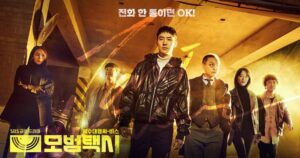
“Taxi Driver” is a thrilling series in the vein of “The Equalizer,” “Profiler” and “The Pretender.” Rainbow Taxi Service driver by day and justice seeker by (mostly) night, Do-Gi and his team are funded by a philanthropist whose parents were murdered decades ago. The goal is to rehabilitate them, but what it all boils down to is revenge.

“Navillera” (나빌레라)

For septuagenarian Shim Deok-Chul, his unfulfilled dream is ballet. As a child, he had wanted to take lessons, but his father stopped him. There was the lack of money. But there was (and still is) also the prejudice against men who participated in the artform. For many close-minded people who fear the unknown, dancing isn’t a masculine hobby to take up.

“Vincenzo” (빈센조)

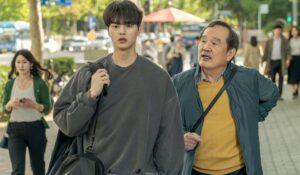
The showrunners behind “Vincenzo” took their time in letting the highly engaging story unfold in a believable way. Well, as believable a story as you can have about a Korean-born child who ends up becoming a consigliere for a top mafia don in Italy. This series is one of Song Joong-Ki’s strongest K-dramas.

“Tomorrow, With You” (내일 그대와)

“Tomorrow, With You” has so many wonderful elements — especially the adorable chemistry between the two leads. But the frustrating part was watching just about everyone in the series keep integral secrets from each other in an attempt to change — and protect — their future.

“Minari”: Deconstructing the American Dream

Lee Isaac Chung is an astute filmmaker, who pays close attention to the smallest details. With “Minari,” he has created a universally relatable film, while inserting elements that are specifically Korean.

“The Uncanny Counter” (경이로운 소문)

Well written and terrifically acted, “The Uncanny Counter” is suspenseful and heartwarming. And in a rarity for Korean dramas, there is no second lead syndrome romance to mess with the plot.

“Start-Up” (스타트업)

“Start-Up” has a second male lead (Kim Seon-ho) who is so charismatic that his storyline often overshadows that of the very handsome lead (Nam Joo-hyuk). Ultimately, the K-Drama reinforces the idea that no matter how broken a family is, the ties remain – for better or worse.

“Flower of Evil” (악의 꽃)

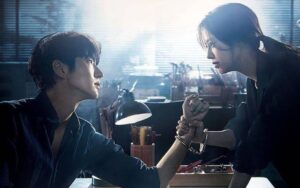
The chemistry between Lee Joon-Gi and Moon Chae-Won is strong in “Flower of Evil.” Viewers never doubt their love for each other. One of the most telling signs of their relationship is that even during times when she isn’t sure who he really is, she never stops referring to him as 자기야 / jagiya, which literally means that he is hers.