“Tune in for Love” (유열의 음악앨범)
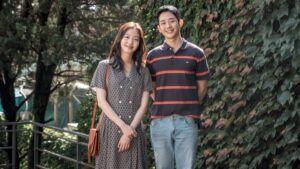
Set in the 1990s, “Tune in for Love” is a beautiful slice-of-life film focused on a young couple who meet as teenagers, lose touch, and reunite on and off throughout their twenties.
Journalist, Author & Syndicated Columnist
Set in the 1990s, “Tune in for Love” is a beautiful slice-of-life film focused on a young couple who meet as teenagers, lose touch, and reunite on and off throughout their twenties.
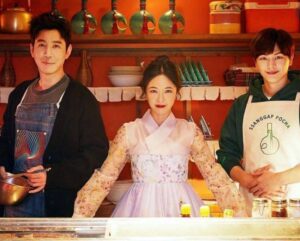
Hwang Jung-Eum is one of my absolute favorite actresses. I love everything about her, especially the forthright way she delivers her dialogue. Her chemistry with both leading men is on point and viewers can see the family-like dynamics shared by the trio. Choi Won-Young and Yook Sun-Jae are superb actors whose subtle (and overt) mannerisms speak to viewers without them having to utter a word.

Director Yeon Sang-Ha (“Train to Busan”) adapted “Hellbound” from his own webtoon of the same name. He makes it clear that cults are the true sinners, which manipulate people’s lives with fear. And that hell isn’t necessarily a place foreign to us, because it’s where we may already be living.

Lee Jung-Jae and Shin Min-A star as a political dream team working for opposing candidates. He is a former police officer, whose goal it is to become an assemblyman. She was an attorney and on-air journalist before becoming an assemblywoman.

“Hometown Cha-Cha-Cha” is one of those slow-moving K-dramas that makes viewers wish they had the same kind of relationship as the characters do — not just with love interests, but with their friends.

You know how in most action series, there is that one guy who can fight a team of gangsters, get stabbed and bounce back into action in no time? In “My Name,” that guy is a kickass woman.

“Hospital Playlist” is a good series, where the core friendship is warm and engaging. The five doctors have the kind of relationship with each other that makes me envious … even though I don’t particularly feel a need for that many close friends in my real life. (haha)
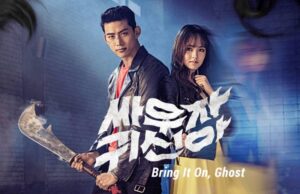
The series parable seems to be that if you have hate in your heart, you are susceptible to being influenced to hurt others, just because you can. “Bring It On, Ghost” started off as an uneven series. But once you get past the first couple episodes, it becomes a must-see K-drama that’s filled with action and a lot of heart.

“Racket Boys” is a sweet series centering around a teenager, who’s forced to quit baseball when his father moves them from Seoul to the countryside. Disappointed and bitter, Hae-Kang begrudgingly joins the badminton team — which his father coaches — on the condition that if the team wins a medal, his dad will get them Wi-Fi at their house.
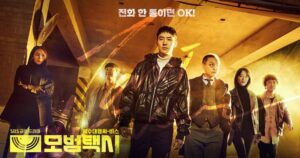
“Taxi Driver” is a thrilling series in the vein of “The Equalizer,” “Profiler” and “The Pretender.” Rainbow Taxi Service driver by day and justice seeker by (mostly) night, Do-Gi and his team are funded by a philanthropist whose parents were murdered decades ago. The goal is to rehabilitate them, but what it all boils down to is revenge.
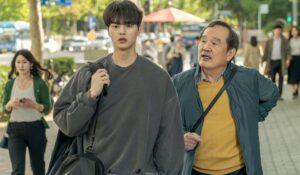
For septuagenarian Shim Deok-Chul, his unfulfilled dream is ballet. As a child, he had wanted to take lessons, but his father stopped him. There was the lack of money. But there was (and still is) also the prejudice against men who participated in the artform. For many close-minded people who fear the unknown, dancing isn’t a masculine hobby to take up.

The action sequences in “Vagabond” are thrilling and the plot is fast-paced and engaging. But the ending seems rushed, incomplete and utterly unsatisfying.

This second season of “Penthouse” is full of subterfuge, a revelation about who one of the students’ real father is and lots and lots of comeuppance. Oh, and there’s the murder of another teenage student, too.

Well written and terrifically acted, “The Uncanny Counter” is suspenseful and heartwarming. And in a rarity for Korean dramas, there is no second lead syndrome romance to mess with the plot.
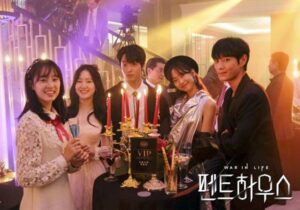
“Penthouse” starts off with the most makjang storyline of the year. This deliciously gripping female-centric series revolves around rival classical singers and includes a (dun dun dun!) switched-at-birth plot twist. Did I mention that one of male characters has a torture chamber in his home, because, why not? Mixed in with the outrageous content is a parable about the haves and the have nots.

“Start-Up” has a second male lead (Kim Seon-ho) who is so charismatic that his storyline often overshadows that of the very handsome lead (Nam Joo-hyuk). Ultimately, the K-Drama reinforces the idea that no matter how broken a family is, the ties remain – for better or worse.

11 Best K-Dramas of 2020: Rivals, Lovers, and Slow Burning Intrigue. These shows are must-watch television. My latest for Teen Vogue.

“Record of Youth” is Park Bo-Gum’s swan song before he enlisted to serve his mandatory military duty in South Korea. While it’s meant to be a traditional love story, the friendship between the three male leads and the woman Park loves was the real draw.
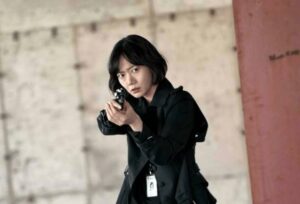
There’s so much lying going on in the second season of “Stranger” that it’s difficult to figure out who’s truth is real. There are so many players convinced that their own criminal acts are for the betterment (cough cough) of Korea’s economy and future that they should be given a pass on their own wrongdoings.
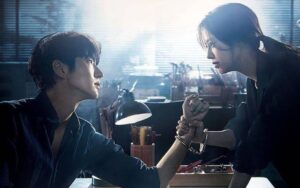
The chemistry between Lee Joon-Gi and Moon Chae-Won is strong in “Flower of Evil.” Viewers never doubt their love for each other. One of the most telling signs of their relationship is that even during times when she isn’t sure who he really is, she never stops referring to him as 자기야 / jagiya, which literally means that he is hers.