Rockin’ in the New Year
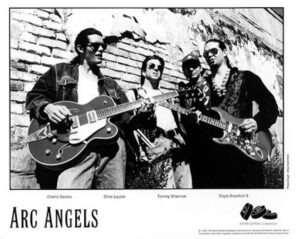
As a pre-teen, Charlie Sexton studied guitar with the late Stevie Ray Vaughan. Now 23, the former solo artist is teamed up with two members of Vaughan’s band Double Trouble, as well as another Vaughan pupil.
Journalist, Author & Syndicated Columnist
As a pre-teen, Charlie Sexton studied guitar with the late Stevie Ray Vaughan. Now 23, the former solo artist is teamed up with two members of Vaughan’s band Double Trouble, as well as another Vaughan pupil.
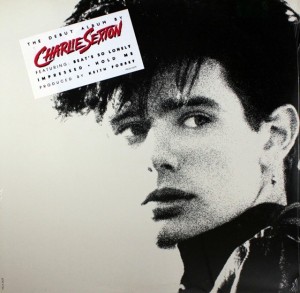
“I wave a banner for Charlie (Sexton),” David Bowie said, calling from Liverpool, England. “I like him a lot. He’s a good kid and very talented. Yes, he’s very pretty, but he didn’t need to be oversold. (MCA) saw him as a one-man Duran Duran, which was a big mistake. Charlie’s a blues boy and that’s where he really shines. Arc Angels probably is the best thing for him at this point in his career.”
“I crush your head. I crush your head. You’re a flathead!” So cries the Head Crusher, a Brylcreemed loser in plaid pants and thick glasses who whiles away his days air-pinching victims’ heads between his thumb and forefinger.

It has been a long time since David Bowie has felt this good about himself. The former David Robert Jones, Ziggy Stardust and Thin White Duke has carved out a new musical niche without creating a new persona to play it out. Bowie is in Liverpool, England, on this day, congenially promoting his group, Tin Machine. He’s newly engaged to the model Iman, and sips on a cup of hot tea, his substance of choice these days. Mentally scanning his flamboyant 25-year career, he comes to the conclusion that his life, as that of most musicians, would make a boring film.
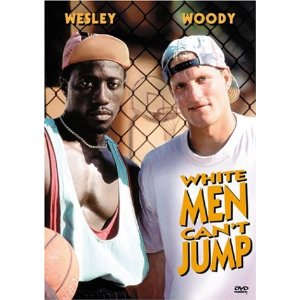
In Hollywood, where every other person claims to be an actor, singer, model or screenwriter, actor Woody Harrelson doesn’t raise too many eyebrows when he jams with his group Manly Moondog and the Three Kool Kats. But when the “Cheers” star takes his 10-piece band out on the road, he attracts a crowd that’s made up of music lovers as well as a strong contingent of curiosity seekers who want to know if “the boy can really sing.”
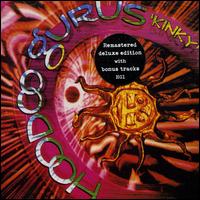
You wouldn’t think that a name like the Hoodoo Gurus would need dressing up. But when the Australian rock band formed 10 years ago, they billed themselves as Le Hoodoo Gurus.
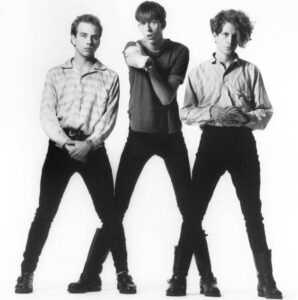
When Jim Ellison lived at home in west suburban Addison, his parents got used to waking up and finding teenage girls parked in front of their home, hoping to catch a glimpse of the Material Issue singer. When he was on the road touring, Ellison’s mom would walk past his bedroom and hear giggling fans leaving vaguely obscene messages on his answering machine.

With Jesus Jones, what you hear isn’t always what you get. Spearheaded by songwriter-vocalist Mike Edwards, Jesus Jones is a band that uses sampling as an art form rather than an easy way out. The sound snippets Edwards selects to sample are rarely left in their original state. Rather, he creates new sounds by elongating sighs, changing pitches and distorting voices.
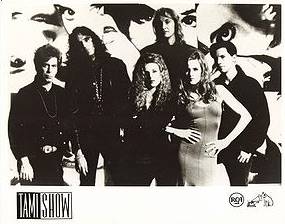
“I saw Jellyfish on David Letterman’s show and they were really, really good,” said Claire Massey, vocalist for TAMI Show, the Chicago-based pop-rock group. “(Their) being so good made me feel a little estranged from playing live and writing music because we’ve done so many things for radio and promotion that have been more of presentations than concerts. It has to be done, but it also gets a little frustrating sometimes.”
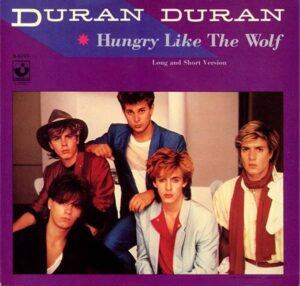
Music today looks better than ever, thanks to videos that airbrush ordinary-looking folks to pinup perfection and catapult so-so singers to superstar status. If looks can thrill, then MTV delivers the goods. The network has made music fair game for artists who sometimes control their visually enticing pecs better than their voices.

When the hard rock group Extreme boarded the Trinidad for an hourlong cruise along the Chicago River last week, several hundred fans, waiting on deck, were surprised that the band had four members. “Who’re those two guys?” one young woman said to no one in particular. “Are they roadies?”
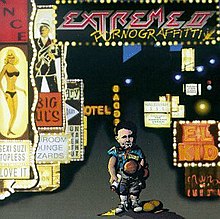
Anyone who buys Extreme’s album solely on the strength of the Boston-based group’s No. 1 hit ballad “More Than Words” is going to be in for a big, loud surprise. The majority of the songs on “Extreme II Pornograffitti” are fast, raucous and hard-rocking.
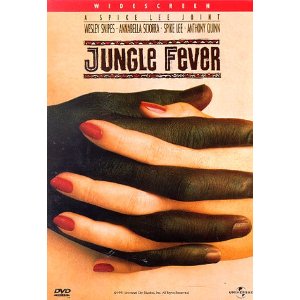
There’s a scene in Spike Lee’s new film, “Jungle Fever,” that hit a little too close to home for Wesley Snipes. The lovers portrayed by him and co-star Annabella Sciorra are engaged in a playful embrace that a police officer mistakes as a black man raping a white woman. Snipes’ character gets a gun put to his head.

Guns N’ Roses have been hailed and assailed as everything from rock ‘n’ roll’s messiahs to self-indulgent spoiled brats living out a hedonistic fantasy. They are musicians whose musical justification always has packed a stronger punch than the convoluted interviews they don’t readily grant anymore.

Everyone knew Chris Isaak would become a star. No one knew that it would take this long. Six years after being touted as the proverbial next big thing in rock ‘n’ roll, Isaak has fulfilled the prophecy of music critics and fans. With the release of his debut LP “Silvertone” in 1985, Isaak was pronounced as this generation’s answer to Elvis Presley and Roy Orbison, all rolled into one neat, Brylcreemed package.

A few days before my 17th birthday in 1983, INXS was scheduled to play a 21-and-older show at the Park West, which left me in a quandary. On the one hand, I really wanted to check out this new band that had a sound like nothing I’d heard before. But I also was cowed by the fact that the only fake ID I had said I was 32. INXS won out.

The Kids in the Hall are comedy’s answer to matinee idols. In their native Canada, the young, smart and cute Kids attract groupies who would look at home at a Winger rock concert.

The Goo Goo Dolls make music loud enough to get a headache over, but melodic enough to dance to. But for all the noise the three-man Goos make onstage, their harmonies save them from being just another angry young group.

When I first saw Tommy Conwell’s teen-idol face, I thought here was a guy who could win over the Tommy Page crowd with no problem. When I first heard him sing, I was shocked by what came out of that mouth. Make no mistake about it. Conwell is nobody’s pretty boy. He is a serious musician who happens to have a youthful, not-so-serious outlook on life.

Back in 1979, Cheap Trick didn’t have to beg anyone to want them. The power-pop quartet from Rockford was riding high on the phenomenal success of their fourth album, “Live at Budokan.” The hit album, recorded in Japan during a concert tour, spawned several Top 10 singles, including “I Want You To Want Me.” The buzz surrounding “Budokan” also taught the group that timing can be more important than substance. The studio version of the “Want You” song from 1977’s “In Color” album went nowhere fast.