11 K-Dramas With Strong Women Characters & Empowering Storylines

Lately, there have been some compelling K-dramas where the female lead is more than just an object of desire. Rather, she is the capable one who is an integral part of the plot. Here are 11 K-dramas from recent years that exemplify female empowerment.


“The Silent Sea” (고요의 바다)

“The Silent Sea” is based on director Choi Hang-Yong’s short film of the same name. Starring Bae Doona and Gong Yoo, the eight-part series is set on the moon, where the astronauts have been tasked with recovering research from the previous mission.

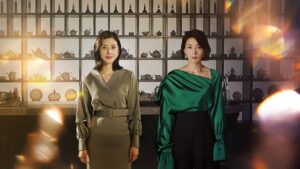
“Mystic Pop-up Bar” (쌍갑포차)

Hwang Jung-Eum is one of my absolute favorite actresses. I love everything about her, especially the forthright way she delivers her dialogue. Her chemistry with both leading men is on point and viewers can see the family-like dynamics shared by the trio. Choi Won-Young and Yook Sun-Jae are superb actors whose subtle (and overt) mannerisms speak to viewers without them having to utter a word.

“Hellbound” (지옥)

Director Yeon Sang-Ha (“Train to Busan”) adapted “Hellbound” from his own webtoon of the same name. He makes it clear that cults are the true sinners, which manipulate people’s lives with fear. And that hell isn’t necessarily a place foreign to us, because it’s where we may already be living. 

“Chief of Staff” (보좌관): Season 1 & 2

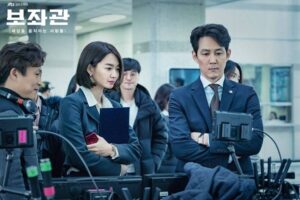
Lee Jung-Jae and Shin Min-A star as a political dream team working for opposing candidates. He is a former police officer, whose goal it is to become an assemblyman. She was an attorney and on-air journalist before becoming an assemblywoman.

“D.P.” (디피)

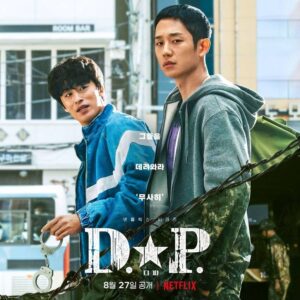
The superb “D.P.” is not an easy series to watch. While not as gory as “Squid Game,” it’s more disturbing in many ways, because it deals with South Korea’s real-life mandatory military duty — which requires every able-bodied Korean man to enlist for approximately two years.

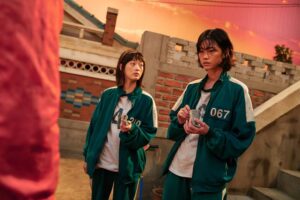
In ‘Squid Game,’ children’s games get awfully bloody

NPR asked me to share my thoughts about the Korean series, “Squid Game,” for their Pop Culture Happy Hour podcast. We discussed the controversy about the subtitles, whether the Western actors in Episodes 7 lended anything to the series and whether a Season 2 would be a good thing or not.

“Hospital Playlist” (슬기로운 의사생활): Season 2

“Hospital Playlist” is a good series, where the core friendship is warm and engaging. The five doctors have the kind of relationship with each other that makes me envious … even though I don’t particularly feel a need for that many close friends in my real life. (haha)

“Squid Game” Is a Social Allegory Informed by Korean History

“Squid Game” is not this year’s “Parasite,” so much as it is a satire in the vein of “A Modest Proposal.” Just as Jonathan Swift pointed out the abject brutality of telling the poor to satiate their hunger by eating healthy, plump babies, Hwang depicts the cruelty of lording a huge sum of money – literally – over desperate people’s heads, knowing that most will die as they lived: penniless.

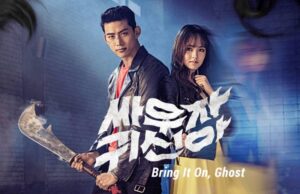
“Bring It On, Ghost” (싸우자 귀신아)

The series parable seems to be that if you have hate in your heart, you are susceptible to being influenced to hurt others, just because you can. “Bring It On, Ghost” started off as an uneven series. But once you get past the first couple episodes, it becomes a must-see K-drama that’s filled with action and a lot of heart.

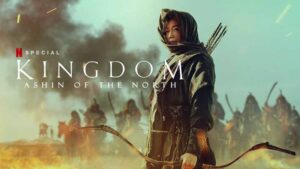
“Kingdom: Ashin of the North” (킹덤: 아신전)

“Ashin of the North” is screenwriter Kim Eun-Hee’s concession to “Kingdom” fans, who are eagerly awaiting the third season of the popular Netflix series. This stand-alone episode — or film, depending on how you view it — is entertaining, but not nearly of the same caliber of storytelling as the first two seasons of this zombie period piece.