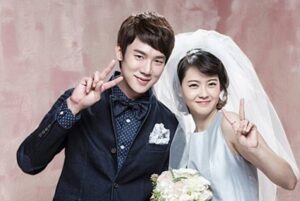
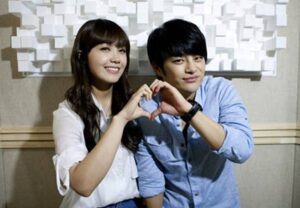
“Cinderella and Four Knights” (신데렐라와 네 명의 기사)

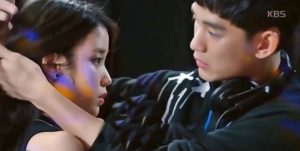
There are a some really great moments in “Cinderella and Four Knights.” But there was an element that made me uncomfortable. When we meet the female lead, she is not yet 18 and is a few months away from her high school graduation. It’s vague how old the Knights are, but since they are all clearly out of college, I’d guesstimate that they range from mid to late 20’s. Ten years isn’t a big difference when you’re a 30-year-old dating a 40something. But when one half of the duo is 17 … I don’t know. It just detracted from my enjoyment of the series.
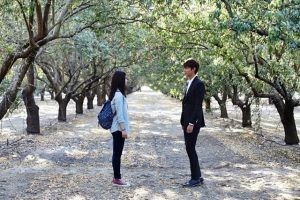

“The Heirs” (왕관을 쓰려는자, 그무게를 견뎌라-상속자들)

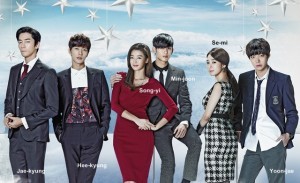
I always viewed “The Heirs” as a much-better followup to “Boys Over Flowers.” Park Shin-Hye and Lee Min-Ho share amazing chemistry as the lead couple.

“Uncontrollably Fond” (함부로 애틋하게)

What would you do if you knew that you had three months left to live? Would you spend it with the ones you love, or would you try to right the wrongs in which you played a part? That’s the dilemma for Korea’s top Hallyu star Joon-Young, who is dying. I don’t feel bad about revealing this bit of information, because it’s revealed early on in this series.

“Ode to My Father” (국제시장)

In a review that ran in the New York Times, film critic Jeannette Catsoulis gave “Ode to My Father” a big thumbs down for being “syrupy” and for having “packaged pain … likely to leave Western audiences cold.” While there is no doubt that director Yoo Je-Kyoon would’ve loved for American audiences to embrace his movie, it’s also undeniable that this film was not made with Western moviegoers in mind. It was made for Koreans.

“Running Man (런닝맨)”

The combination of slapstick humor and witty banter makes “Running Man” a fun viewing experience, even for those who don’t understand Korean. For instance, there is a recurring game where participants will stand in front of mike stands that are rigged to blast air in their faces if they answer incorrectly. My son, now 8, has no comprehension of what’s being asked, but he will search these episodes out to laugh at the slo-motion expressions on the cast members faces when they are “punished.”

“Doctor Crush” (닥터스)

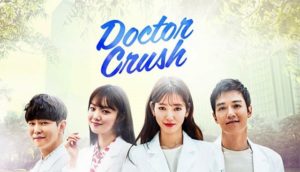
“Doctor Crush” is full of bad characters full of bad intentions: the money-hungry father-son duo trying to take over the hospital; Ji-Hong’s uncle, who steals his inheritance and then dumps him off at an orphanage; Hye-Jung’s father, who abandons her; and even Hye-Jung’s raison d’etre for much of the series: revenge.

“Descendants of the Sun” (태양의 후예)

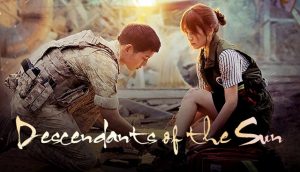
Production on “Descendants of the Sun” began just three months after Song Joong-Ki finished his mandatory two-year military duty in Korea. He displays an easygoing flair in the role of the charismatic leader of the Alpha Team. Even bulked up (for him), Song is slight of build and baby faced. At times, I wondered whether someone like So Ji-Sub would’ve been better cast in the role. But, what he lacks in brawn, Song makes up with magnetism. He has one of those faces that the camera loves.

“The Moon that Embraces the Sun” (해를 품은 달)

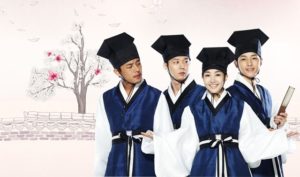
A sweeping dramatic series set in Korea’s Joseon era, the “Moon That Embraces the Sun” is a love story that at times is painfully heartbreaking. But, it’s also filled with hope and humor. That combination makes for an addictive series that will leave viewers hungering for more.

“Secretly, Greatly” (은밀하게 위대하게)

“Secretly, Greatly” starts off as a comedy and veers off into a drama with a graphic, violent ending. Had the film stuck to one genre, the result would’ve been more cohesive and effective. Still, it’s a worthwhile film that will keep viewers on the edge of their seats. Kim Soo-Hyun shows impressive range in his dual portrayal of a North Korean spy and the dimwitted village idiot that’s his cover.

“Dream High” (드림하이)

“Dream High” is one of those series that starts off with a ridiculous premise. But, if you stick with it, you’ll be amused, angered and (at times) deeply touched. Yes, this is a glossy high school musical with a love triangle. But it also deals with child abandonment, sexual assault and the abuse of children by the system set in place to manufacture “idols.” This isn’t just a Korea thing. Think about all the American boy band members who have revealed how they were abused by their predatory management.

“My Love From Another Star” (별에서 온 그대)

Sold as a romantic comedy, “My Love From Another Star” definitely delivers on that front. But it’s also a wonderful story about true love, alienation and sacrifice.

“Coffee Prince” (커피프린스)

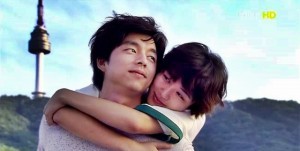
On the surface, “Coffee Prince” is your standard boy-meets-girl romantic comedy with a few roadblocks thrown in for good measure. Thanks to the chemistry shared by the attractive leads (Gong Yoo and Yoo Eun Hye), the series is highly watchable and I understand why so many fans are repeat viewers. But beneath the cute exterior, the series deals with issues such as sexual confusion, gender roles and poverty.

“Answer Me 1988” (응답하라 1988)

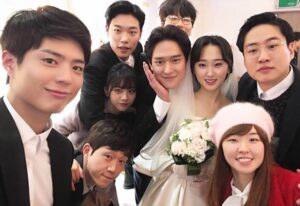
One of the things that I really enjoy about the “Answer Me” trilogy is the lifelong friendships that that characters share. Whereas the first two series focused primarily on the teenagers, “Answer Me 1988” delves into the backstories of their parents as well. And that, to me, made this chapter a standout. The parents’ storylines were as interesting–if not more–than the who-will-she-marry premise that is predominant in each of the “Answer Me” installments.

“Answer Me 1997” (응답하라 1997)

Everything that “How I Met Your Mother” did wrong (including its series finale), “Answer Me 1997” does right. Funny and poignant with superb acting by the entire cast, the series tells the story of 6 childhood friends whose lives are intertwined through adulthood. Kudos to K-pop Hoya (of the group Infinite) for his thoughtful (and unstereotypical) portrayal of a gay teenager who is in love with his best friend; and to the writers for not portraying it as “weird.”