“Weak Hero Class 1” (약한영웅 Class 1)

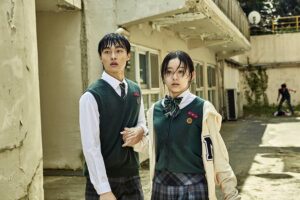
Park Ji-hoon is almost unrecognizable from his Wanna One days. Leading this cast, which also includes Choi Hyun-wook (Twenty Five Twenty One) and Hong Kyung (D.P.), Park is so intensely good as a bullied boy who uses classical conditioning (Pavlov’s Dog) and Newton’s Laws of Motions to fight back against his tormentors.

Don’t believe the K-dramas: Look to “Return to Seoul” for a more realistic view on Korean adoptees

In the superb “Return to Seoul” – which is Cambodia’s Oscar entry for the Best International Film category – French Cambodian filmmaker Davy Chou (“Golden Slumbers”) takes a look at what it means to be an adoptee who unexpectedly is reunited with her birth parents.

The 11 Best K-Dramas of 2022 to Watch Immediately

The best K-dramas of 2022 were bookended by a pair of brutal teen-centric dramas that premiered at the beginning of the year (“All of Us Are Dead”) and the end (“Weak Hero Class One”). They frame a year of superb Korean dramas, so many that it was difficult to narrow it down to just 11 top picks.

“One Ordinary Day” (어느 날)

As Hyun-soo, Kim Soo-hyun is superb in a difficult role where he has to be sympathetic, but also could be a cold-blooded and manipulative killer. His role requires him to cry in a manner that allows viewers to feel his panic and fears. And Kim comes through again superbly, proving he is one of the best actors of his generation.

“Extraordinary Attorney Woo” (이상한 변호사 우영우)

I loved “Extraordinary Attorney Woo.” The storylines were compelling and the actors did a fine job in bringing their characters to life. Park Eun-bin has been singled out for her extraordinary portrayal of a highly-functioning autistic attorney. But that’s where my conflict lies. As many autistic people have already pointed out, as good as Park was in her role, it is unsettling to watch a non-disabled actor portray a character who is on the spectrum. Most of my friends and acquaintances who have autistic children said they couldn’t force themselves to watch beyond the first episode, because her portrayal felt like a mockery of what they live through.

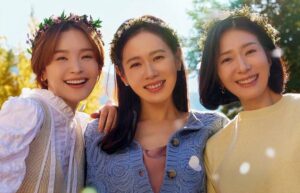
“Thirty-Nine” (서른, 아홉)

“Thirty-nine” is a reminder that while we’ve all made mistakes in our lives, we can’t continue to punish ourselves forever. Life is short. There is no guarantee of a tomorrow. Be honest and live your best life.

“Twenty-Five Twenty-One” (스물다섯 스물하나)

The burgeoning romance in “Twenty-Five Twenty-One” is based on a strong friendship. But some viewers have pointed out that the story would’ve been more effective if the female lead character hadn’t been underage when they met.

How “All of Us Are Dead” Uses a Zombie Attack to Examine Korean & Global Issues

There’s a lot to unpack underneath the surface of Netflix’s hit zombie thriller. Here are six examples of how “All of Us Are Dead” utilizes the zombie genre to reflect on societal issues that are reflected around the world, with a focus on some issues unique to South Korea.

11 K-Dramas With Strong Women Characters & Empowering Storylines

Lately, there have been some compelling K-dramas where the female lead is more than just an object of desire. Rather, she is the capable one who is an integral part of the plot. Here are 11 K-dramas from recent years that exemplify female empowerment.

“D.P.” (디피)

The superb “D.P.” is not an easy series to watch. While not as gory as “Squid Game,” it’s more disturbing in many ways, because it deals with South Korea’s real-life mandatory military duty — which requires every able-bodied Korean man to enlist for approximately two years.

“Squid Game” Is a Social Allegory Informed by Korean History

“Squid Game” is not this year’s “Parasite,” so much as it is a satire in the vein of “A Modest Proposal.” Just as Jonathan Swift pointed out the abject brutality of telling the poor to satiate their hunger by eating healthy, plump babies, Hwang depicts the cruelty of lording a huge sum of money – literally – over desperate people’s heads, knowing that most will die as they lived: penniless.

“Move to Heaven” (무브 투 헤븐: 나는 유품정리사입니다)

“Move to Heaven” is a beautiful and at times brutal series that tells so many touching stories. One of the most important aspects was in how the series showed respect for the dead, even when the supposed loved ones of the deceased don’t seem to care.

“Vincenzo” (빈센조)

The showrunners behind “Vincenzo” took their time in letting the highly engaging story unfold in a believable way. Well, as believable a story as you can have about a Korean-born child who ends up becoming a consigliere for a top mafia don in Italy. This series is one of Song Joong-Ki’s strongest K-dramas.

“Kingdom” (킹덤)

Like “Train to Busan,” “Kingdom” was released well before the coronavirus outbreak cause pandemonium worldwide. Both are sociopolitical projects disguised as zombie horror thrillers, where those in power don’t try to prevent the outbreak, so much as they try to stop news of the outbreak from being released. The public’s ignorance suits their own needs.

“It’s Okay to Not Be Okay” (사이코지만)

“It’s Okay to Not Be Okay” is an unconventional love story that also focuses beautifully on mental health. It depicts how the aftermath of abuse and abandonment affects the psyche, but reaffirms that no one is a lost cause — and that seeking help is self love.