Former “Twilight” Star Justin Chon Unpacks His New Movie “Blue Bayou”

“One of my objectives in filmmaking is to bring empathy and understanding to our community,” said “Blue Bayou” writer, director and star, Justin Chon.
Journalist, Author & Syndicated Columnist
“One of my objectives in filmmaking is to bring empathy and understanding to our community,” said “Blue Bayou” writer, director and star, Justin Chon.

“Ashin of the North” is screenwriter Kim Eun-Hee’s concession to “Kingdom” fans, who are eagerly awaiting the third season of the popular Netflix series. This stand-alone episode — or film, depending on how you view it — is entertaining, but not nearly of the same caliber of storytelling as the first two seasons of this zombie period piece.

“Space Sweepers” has a lot of things going for it — great acting, cinematography, special effects. But once you’re done oohing and ahhing at the visual onslaught, it’ll sink in that what the film lacks is a cohesive storyline.

“Minari” star Alan S. Kim — just turned 9 — is going to wear “a tuxedo or something” to tonight’s Oscars ceremony.

Lee Isaac Chung is an astute filmmaker, who pays close attention to the smallest details. With “Minari,” he has created a universally relatable film, while inserting elements that are specifically Korean.

While “To All the Boys” author Jenny Han may have no desire to write a fourth book in this series, wouldn’t it be fun if Kitty got a spinoff? She could move to Seoul to become a K-pop trainee, learn Korean, and reunite with her crush Dae (Jeon Ho-Young). TATB doesn’t have to end with Lara Jean and Peter. With a little bit of tweaking, it can go on always and forever.

What “Peninsula” lacks in humanity is made up with spectacular car chases and firearms. Is it as good as “Train to Busan”? No, but it’s good enough, in a Hollywood shoot-em-up kind of way.

Once “Seoul Searching” gets past the caricatures, the story delves into the deeper meaning of what it means to be Korean in societies that view you as a perpetual foreigner. Though the film concentrates on Korean Americans, two of the more memorable characters are Korean teens raised in Germany (Klaus, played by Teo Yoo) and Mexico (Esteban Ahn’s Sergio).

“Train to Busan” does a great job at depicting how people deal with death during unthinkable times. When your loved one is infected and your only option is to perish (as human beings) with them or kill them so that you (and others) can survive, what would you do?

“Parasite” has already made history for South Korea as the country’s first film to win a Best Picture Academy Award. There are some moments I can’t wrap my head around though, and one of them was the inclusion of Illinois State into the dialogue.

MTV News interviewed me for this piece on how differently “Parasite” director Bong Joon-Ho and BTS are viewed by critics.
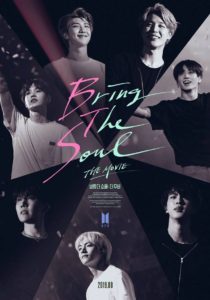
BTS will be back on the big screen this summer. The Korean pop group announced today that their latest feature film, “Bring the Soul: The Movie,” will have a global release on August 7. It arrives just six and a half months after the septet’s last film release, “Love Yourself in Seoul.”

Released in 2011, “Sunny” focuses on a group of middle-aged women, who reunite to fulfill their terminally-ill friend’s wish to see them all together again. The premise sounds maudlin, but deftly directed by Kang Hyeong-Cheol, the film moves seamlessly between the women’s current lives and their (relatively) care-free high school days.

“Burn the Stage: The Movie” is a taut, entertaining look at BTS — the world’s most famous boy band. While the music, choreography and comic elements will endear the group to moviegoers, it’s their kindness that I remembered long after I had left the theater.

“My Love, Don’t Cross That River” is a love story that shows there is beauty to be found in everyday life, even with death looming. A languid documentary about an elderly couple that has been married for more than 70 years, the 86-minute film — which is both tranquil and heartbreaking — is deftly directed by Jin Mo-Young.

If you could re-live a part of your life, knowing that the time you had with your loved ones would be fleeting, would you risk it? The Korean feature film “Be With You” (지금 만나러 갑니다) offers this intriguing concept. It wasn’t perfect, but it made my heart hurt … and happy.
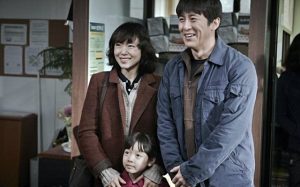
The first Korean film to be shot in the Caribbean, “Way Back Home” was shot in a real women’s prison, with some of the actual guards and detainees serving as background characters. The filmmakers clearly believe that while Jang Mi-Jeong (the woman on whom the movie is based) may have been guilty, her crime was less egregious than the way the Ministry of Foreign Affairs handled her case.

In a review that ran in the New York Times, film critic Jeannette Catsoulis gave “Ode to My Father” a big thumbs down for being “syrupy” and for having “packaged pain … likely to leave Western audiences cold.” While there is no doubt that director Yoo Je-Kyoon would’ve loved for American audiences to embrace his movie, it’s also undeniable that this film was not made with Western moviegoers in mind. It was made for Koreans.

“Secretly, Greatly” starts off as a comedy and veers off into a drama with a graphic, violent ending. Had the film stuck to one genre, the result would’ve been more cohesive and effective. Still, it’s a worthwhile film that will keep viewers on the edge of their seats. Kim Soo-Hyun shows impressive range in his dual portrayal of a North Korean spy and the dimwitted village idiot that’s his cover.

A blockbuster hit in Korea, “Thieves” features an all-star cast that includes Jun Ji-Hyun and Lee Jung-Jae. (The duo shared the big screen in the 2000 film “Il Mare” — the film that was later remade as “The Lake House” with Keanu Reeves and Sandra Bullock.)