“Dream” (드림)

Based on the real-life Homeless World Cup (which was held in September in Seoul), “Dream” offers a more cynical look than Great Britain’s “The Beautiful Game,” which shares the same topic.
Journalist, Author & Syndicated Columnist
Based on the real-life Homeless World Cup (which was held in September in Seoul), “Dream” offers a more cynical look than Great Britain’s “The Beautiful Game,” which shares the same topic.

If you could go back in time and make your parents’ lives better, would you? Eun-gyeol (Ryeoun) doesn’t exactly make this choice. Rather, he’s mysteriously thrust into a bygone era where he meets his high school-age parents.

Based on the webtoon of the same name, the premise revolves around a masked man who uses the pseudonym Gaetal/게탈 — which translates into dog mask — to mete out justice for those who they feel deserved stronger punishment for their crimes.

Based on the novel by former psychiatric nurse Lee Ra-ha and helmed by “All of Us Are Dead” director Lee Jae-gyu, “Daily Dose of Sunshine” tackles the very real world problems of how unkind society can be to people suffering from mental health issues.

“#Alive” was filmed a year before countries worldwide were locking down due to the COVID-19 pandemic. But its depiction of isolation and fear of the unknown mirrors what millions of people went through (minus the zombies) in this 2020 thriller.

If you’re looking for a light K-drama where the plot is not really the point, “CEO-dol Mart” is the show to watch. The premise of this series is that after the death of a member, the idol group the Thunder Boys broke up and went their separate ways before they had a chance at getting recognition.

Playing undercover police officer Jun-mo — who hopes that his gig will lead to a promotion — Ji Chang-wook is in his element as an eager cop who infiltrates a drug cartel with ties to China and Japan.

There is a recurring dream sequence in “Doona!” A young woman is submerged in water. From below, she can see the glitz and glamour of her life as a top star. But when our protagonist startles herself awake, we see her living a mundane life, waking up sweaty in a small apartment and taking long drags of cigarettes in the courtyard. This is how we meet Lee Doo-na, a famous K-pop idol who is hiding away in a shared house for college students.

Set in a hospice, the point of “If You Wish Upon Me” isn’t that the dying can only leave this world if they have a wish fulfilled. Rather, sometimes they need peace of mind before they’ll allow themselves to go.

“The Gangster, The Cop, The Devil” is not a good film, but it’s watchable because its star is Ma Dong-seok. The burly actor stars as a mob boss whose street credibility takes a beating when he is nearly killed by a floppy-haired serial killer (Kim Sung-kyu) — whose modus operandi is rear-ending drivers and then savagely stabbing them to death.

“Dr. Romantic” focuses on genius doctor Boo Yong-joo (Han Suk-kyu), who had been set up to take the fall for a patient’s death. Because he refused to play the kiss-ass game at work, he loses his job.

The first episode of “My Magic Closet” accomplishes what “XO, Kitty” failed to deliver. It deftly tackles identity and what it’s like living as diaspora.
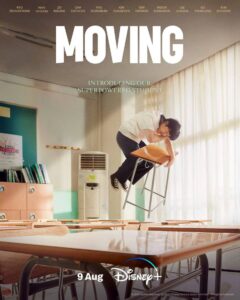
There is a lot going on in “Moving,” Disney’s most-watched K-drama to date. Initially, it appears the series will center on heroic teenagers. But as intriguing as the storylines are for the children, it’s the parents’ arcs that really piqued my interest.

A remake of the Taiwanese series “Someday or One Day,” the Korean version of this time-travel drama isn’t always easy to follow. But if you suspend your belief in reality and just go with the flow, you will find yourself immersed in a compelling plot that centers on love, while it also navigates story arcs about guilt, gaslighting and a, erm, serial killer.
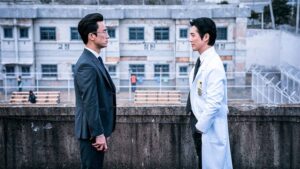
One reason for the popularity of “Doctor Prisoner” may be that it has incorporated some real-life news into its story arcs, similar to how American shows such as “Law & Order” draw ideas from sensational headlines.

On the surface, it appears that “Mask Girl” is about beauty standards and how our looks are a catalyst for who we will become. But by the end of the series, viewers will have been taken on a wild ride where subterfuge and revenge are the norm, rather than the exception, and everyone’s moral compass has been broken.

After learning that his long-time girlfriend is deathly allergic to dogs, Min-soo sets out on a journey to to find a new home for his beloved golden retriever. In the end, he realizes that the solution to his problem was nearby the whole time.

You’ve seen the cold male chaebol/warm, hardworking female combo before in many popular K-dramas (including “Business Proposal” and “Oh My Venus”). But Im Yoon-ah and Lee Jun-ho are so charismatic and easy to watch in “King the Land” that they add a fresh touch to an old concept.

“Rebound” is based on the true story of Busan’s Jungang High School basketball team. Long past its glory years, the team isn’t a priority for the school’s administration. They hire a young and inexperienced basketball coach, Yang-hyun (Ahn Jae-hong), who during his own Jungang school days was a champion athlete.

This second season of “The Uncanny Counter” is good enough. But it is also a reminder that K-dramas are traditionally made to finish after one season. With the influx of Western streaming sites that have figured out how lucrative Korean shows can be, there have been more shows going into their second (or even third seasons). And while I was one of the viewers who had hoped for a second season of this series, I acknowledge that it may have been best to just leave things as they were.