“Suspicious Partner” (수상한 파트너)

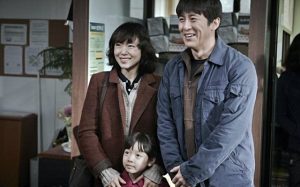
A legal thriller filled with comedy and romance, “Suspicious Partner” is an addictive K-Drama that will keep viewers engaged. Don’t let the 40 episodes put you off. Each episode is less than half an hour long. And the plot is so engaging that the 20 hours goes by quickly.


“BTS: Burn the Stage”: Episode 8

Moreso than any of the previous episodes of “Burn the Stage,” this finale is a love letter from BTS to their fans. The eight-part docu-series ended with “Spring Day” playing over the credits. As many of you already know, that song touches my core every single time I hear it, so I’m a little verklempt as I write this.

“BTS: Burn the Stage”: Episode 7

Having your music cut out mid-song is a living nightmare for musicians. But if you have the wherewithal to go with the flow with the good and the bad, those moments also can become a highlight of the evening. During a concert in Osaka last year, J-Hope was faced with exactly this dilemma. He describes it as the worst thing that can happen at a show. But he handled it with aplomb.

“Strong Woman Do Bong-Soon” (힘쎈여자 도봉순)

“Strong Woman Do Bong-Soon” came out around the same time as “Weightlifting Fairy Kim Bok-Joo.” And that was one reason why I waited so long to watch it. While the latter was a cute drama, it wasn’t great. “Strong Woman” is a wonderful series that started off with so much potential. The first few episodes were so great that I thought I might be awarding it four stars. But I ended up docking it a point, because of the cringe-inducing way it treated gays.

“BTS: Burn the Stage”: Episode 6

The men in BTS are still so young. But I get the impression that they are not oblivious to the passage of time. They know the half life of a musician’s career isn’t forever. Far from it. And while a part of me feels sad that they had to grow up so fast in the music business, the other part is grateful that they appear to be making plans for the future, even as they are enjoying what they have today.

“BTS: Burn the Stage”: Episode 5

I was delighted that Chicago was so beautifully prominent in this episode. Late one night back at their hotel, they’re trying to figure out how to perform on a tiny stage for their first U.S. television appearance. I used to do a little work for JBTV way back when, and I can tell you that the stage is tiny. It’s fine for most of the bands that pass through Chicago. But most bands aren’t BTS.

“BTS: Burn the Stage”: Episode 4

The argument between two members of BTS was hyped up as being a shocking revelation in the previews. But for anyone who has a sibling — or who has ever been in a serious relationship — speaking the uncomfortable truth is par for the course. Arguments often aren’t about what you’re addressing at the time, but rather all the little things that have built up to make you reach that boiling point. What was more interesting to me was watching Jin and V dig to the bottom of the real issue: respect.

“Call Me Mother” (마더)

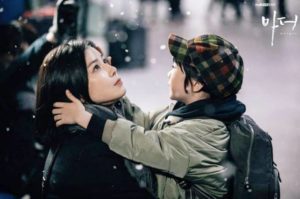
A common element running throughout the plot is that you are not a “real” child if you don’t share your parents’ DNA. One of the central characters views herself as superior to her adopted sister, because … adoption. The emphasis on a family’s pure bloodline is still in effect today in Korea. And though more adoptive families are telling their children about their adoption stories, many still let their kids assume they are biologically related to their adoptive parents.

“BTS: Burn the Stage”: Episode 3

정 (jung) is a Korean word that is difficult to define in English. 정 encapsulates a feeling of love and loyalty that people have for one another. They will do things out of the kindness of their hearts, rather than as quid pro quo. As I watched the members of BTS drinking and laughing together, I realized that it was this 정 they had for each other that was as much of a component of their success as anything else.

“BTS: Burn the Stage”: Episodes 1 & 2

I imagine that for the members of BTS, presenting an idealized version of their real selves was par for the course. But with “Burn the Stage,” they have come to terms with who they truly are and are confident enough to show it to the public. It is difficult to explain why this first episode was so moving for me. Certainly, there is the aspect of seeing Asian Representation so beautifully presented; and in a manner that doesn’t exoticize these young men as strange creatures from a foreign land.

“Hwarang” (화랑: 더 비기닝)

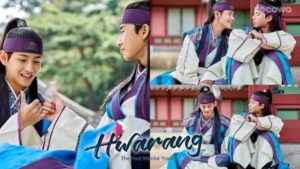
“You get to decide what kind of King you are going to be.” Don’t remember that line from “Hwarang”? That’s because it’s a quote from the blockbuster film, “Black Panther.” When the newly crowned king, T’challa, worries about how he will rule over his subjects, Nakia tells him, “You cannot let your father’s actions define your life.

“Go Back Couple” (고백부부)

If you could go back to your past, would you? And, if so, what would you change? That’s the premise for “Go Back Couple,” a thoroughly-enjoyable drama filled with charismatic leads and a plot that is both funny and touching — especially for those of us who are already parents.

“Somehow 18” (어쩌다 18)

Some might say that there is no way that a young man who looks like Choi Min-Ho (of the idol group SHINee) — even if he’s wearing glasses and having a bad-hair day — would be bullied. But what I liked about this casting was that it reinforces the point that no one is immune from being harassed. And no one is immune from being depressed and wanting to end their lives.

“Fight for My Way” (쌈 마이웨이)

One of the things I enjoy about Korean dramas is that many tend to focus of the main characters’ childhood friendships and how that camaraderie evolves into their adulthood. Such is the case here, where four friends grow up with each other and, eventually, end up falling in and out of love with each other.

“Loving You a Thousand Times” (천만번 사랑해)

The heroine of this Korean drama is the epitome of a long-suffering doormat, whose life would’ve been so much better if she grew a spine and stood up for herself. Instead of being guilted into giving up her hard-earned money — that she had ear-marked for returning to college — to her ungrateful older half-sister, who is “studying” overseas in the United States; or giving up her own body, so that she can pay for her father’s surgery; or letting virtually everyone treat her like a servant … Eun-Nim just swallows her pride and accepts it as her life.

“Way Back Home” (집으로 가는 길)

The first Korean film to be shot in the Caribbean, “Way Back Home” was shot in a real women’s prison, with some of the actual guards and detainees serving as background characters. The filmmakers clearly believe that while Jang Mi-Jeong (the woman on whom the movie is based) may have been guilty, her crime was less egregious than the way the Ministry of Foreign Affairs handled her case.

“Boys Over Flowers” (꽃보다 남자)

I had a difficult time reconciling myself with the fact that I enjoyed “Boys Over Flowers,” while being disgusted that the showrunners never addressed how cruel the main characters were to kids outside of their circle.

“Big” (빅)

Let’s cut to the chase: the plot revolves around a high school student and a doctor who switch bodies after an accident. Yoon-Jae, the 30something doctor is in a vegetative state in the body of 17-year-old Kyung-Joon. Meanwhile, the teenager is alive and well, but he is trapped in the buff body belonging to Gong Yoo, er, I mean Yoon-Jae. Caught between these two is Gil Da-Ran, a wet dishrag of a woman, who (despite her beauty) has absolutely no confidence in herself. When she realizes that Yoon-Jae really isn’t Yoon-Jae and that it may take a while for the two to switch bodies again, she plays along with the charade.

“Weightlifting Fairy Kim Bok-Joo” (역도요정 김복주)

If I were to rate this series, I would give it a 👎 for the first half. But the second half … wow. It was worth sitting through eight hours of meh to get to the satisfying ending. Bok-Joo is the top female wrestler at her school. In order to give the other women on her team a chance of medaling, her coach asks her to go up a weight class. The 5-foot-9 athlete weights roughly 127 pounds and must go up by about 10 pounds. Bear in mind that by U.S. standards, she would be considered thin. But much is made of the fact that she’s a big, overweight girl.

“Goblin: The Lonely and Great God” (쓸쓸하고 찬란하신 도깨비)

There are few things in life that would be more difficult than to watch generations of loved ones grow old and die, while you live on for centuries without them. Such is the case with Kim Shin, a dokkaebi (goblin). For more than 900 years, he has been cursed to live a life of loneliness as atonement for all the enemies he killed during his days as an unbeatable general. Yes, his victims would’ve slain him if they had the opportunity. But, as God says in the narration, they were all precious creations, as well.