By Jae-Ha Kim
Substack (.pdf)
January 4, 2026
This morning1, I woke up to the news that a Brazilian2 woman in her 30s was arrested in South Korea for violating the Stalking Punishment Act. She showed up (again) at the home of BTS member Jung Kook.
° Dec. 13, 2025: she was arrested for trespassing on his property.
° Dec. 28: she showed up again. This time, Jung Kook reportedly got a restraining order against her, which prohibits her from being within 100 meters of his home.
° Jan. 4, 2026: she violated the week-old restraining order by trashing his mail, hanging photos on his railing, and writing messages to him.
This wasn’t Jung Kook’s first run-in with a stalker. Seven months ago in June, a Chinese national in her 30s attempted to enter his home, trying different passcodes on his digital door lock. Thankfully, one of the star’s neighbors alerted the police, who arrested the woman.
In August 2025, police responded to a call that a Korean woman in her 40s trespassed on Jung Kook’s property. Like the other women, she was taken into custody, but not detained.
And between November 12 and 14, a Japanese woman in her 50s was suspected of attempted trespassing. She had tried to decode his front door lock multiple times.

Some of you will remember that in May of 2023, Jung Kook literally pleaded with his fans to stop having meals sent to him. At the time, he said, “Please don’t deliver food to my house. I’m not going to eat it. I’m grateful for the thought, but I eat well on my own.”
While it may sound like an innocuous enough request to ask fans to not show up at his house with food offerings, some people found the request odd. “But…but…if it comes from a delivery service then it’s safe to eat, right?” Of course, how is Jung Kook — or anyone — supposed to know that the food wasn’t tampered with prior to the delivery? Or that the deliverer isn’t an unhinged imposter pretending to be working? Safety aside, who’d want to be put in the position of even owing somebody anything for accepting an unnecessary freebie?
Unfortunately, 사생팬/sasaeng fans3 have no boundaries and do not accept no for an answer. And just as unfortunately, there’s a subset of weirdos who think none of this is a big deal because, hey, it’s not like he was physically harmed or anything, right?
Experts would disagree. For instance, the Danish Stalking Center conducted a study from 2015-2020 and found that victims of stalking share trauma-related PTSD symptoms:
Together with the strikingly high levels of psychopathology and the particularly grave effects of being followed, it is indicated that stalking is a special type of trauma with many negative and harmful effects. Hence, further research into how to properly help stalking victims through preventive interventions and treatment is needed.
In the early aughts, I covered the stalking of western superstars like Gwyneth Paltrow and Sheryl Crow. A jury acquitted the man who had consistently harassed the singer for 15 months. The jurors didn’t believe that his actions — which included showing up uninvited backstage at her concerts and turning up at her father’s office, proclaiming that he and the singer were soulmates — constituted stalking.
According to the late security expert Moshe Alan, 98 percent of all stalkers are harmless fans obsessed with their idols. But it’s that other 2 percent who have the potential to be dangerous. For instance, in 1983, a man was found camping on Olivia Newton-John’s property. Police were called and sent him back home to Louisiana. While he had never physically harmed Newton-John, Perry ended up killing his own parents, cousins, and baby nephew.
Parasocial Relationships aren’t Just a K-pop Thing
While it’s easy to blame the K-pop system for encouraging parasocial relationships between fans and idols, Northwestern University professor Irving Rein told me4 that the modern “celebrity machine” emboldens stalkers. Though he was talking about the western machine, his words are appropos for K-pop as well.
“The object of the whole celebrity industry is to get a committed following for your particular artist,” Rein said. “Imagine a ladder. At the bottom are the invisible consumers. These are the people who claim they’re not interested in anything. Slightly higher up from them are the watchers, followed by the seekers, then the collectors, and fan club members. After a few more rungs, you have the ensnared, and this area would cover the stalker.
“If I’m a celebrity, my thinking is I want to move these people up the ladder to be more committed to me and therefore spend more money on my products. That’s why they have meet-and-greets and sign autographs after their shows. One of the conundrums of show business is if a fan eats all this up, he ends up wanting to get as close as possible to the celebrity. And unfortunately, celebrities can’t pick only normal, healthy people to be their fans. They can end up with a John Hinckley [who tried to assassinate President Ronald Reagan in 1981] trying to impress Jodie Foster.”
Celebrities vs. Stalker “Fans”

2006: TVXQ’s Yunho drank orange juice from someone he assumed was a fan. The stalker had laced the drink with cyanoacrylate adhesive (or super glue). This incident is just one reason why many idols will not accept food from strangers.
2016: Incensed that J-pop star Mayu Tomita had returned the gifts he wanted her to accept, a 27-year-old Japanese man5 sent her hundreds of threatening tweets on Twitter before the idol blocked him. Taking his threats seriously, Tomita reported him to the police, who did nothing. Twelve days after she filed a report, he stabbed her 61 times, screaming, “You should die, die, die!” She was partially blinded, but survived.
2017 – 2018: In 2017, two fans6 bought airplane tickets solely to take pictures of EXO up close. After getting the shots, they canceled their tickets and got a refund.
In December 2018, three Wanna One fans from China and Hong Kong paid for tickets to be on the same flight as the idol group. They reportedly got close enough to the members to take candid photos, and then disembarked right before take-off. Though this may seen relatively harmless, the flight was delayed by an hour due to their actions. They paid less than $100 in penality fees.
2019 – 2020: A German man began prowling around a Seoul neighborhood, asking locals if they could help him find where TWICE’s Nayeon lived. In December of 2019, he attempted to approach her on a flight from Tokyo to Seoul.7
Then in January 2020, Nayeon’s bandmate, Chaeyoung, said this same man accesssed her phone and released her personal cell number on social media. At the time, Chaeyoung said on Instagram, “We are at our limits of staying quiet and waiting for you to stop. Due to the 11 digits that an inconsiderate person posted on the internet, my phone has been bombarded with calls and text messages.”

2024: A sasaeng attacked Sunwoo in a stairwell where he and his group, The Boyz, lived. The “fan” was arrested on charges of trespassing and assault. IST Entertainment revealed that these obsessive fans showed up at their office, the group’s hair salons, and flights. Security also noted that a GPS tracking device was hidden on one of the group’s vans and that stalkers damaged the tires of another.
On November 12, police reported that actor Song Jae-rim (“Moon Embracing the Sun”) had died. They noted that there were no signs of foul play and that a two-page last will and testament was found near his body. An official cause of death was never released, but it is assumed that he died by suicide. Song had been stalked online for over a year by a Japanese sasaeng who had accessed personal photos of Song and his friends, and posted them on X with accusatory and defamatory comments about the actor. As for the sasaeng’s punishment? Nothing. They deleted their X account and was never identified.
2025: In February, a 20something man broke into NewJeans’ dormitory twice and stole items. During this time, the group wasn’t living there and no one was harmed. Though prosecutors wanted him to serve time in prison, he ultimately paid a $7,000 fine and went home.
In July, Billie’s Haruna was in her apartment in Seoul when a man smashed her door down and threatened her.8
What is Being Done to Protect Victims of Stalking? Not Enough.
On October 21, 2021, South Korea initiated the Act on Punishment of Crimes of Stalking (APCS). Those found guilty of stalking could face up to three years in prison and/or a fine of up to $21,695. If weapons were used, the penalties could increase to $34,500.
An abstract by SAGE Journals found that of 193 stalking-related cases from 2021 to 2022, approximately 16.6 percent of the stalkers were diagnosed with mental disorders. The study noted that stalkers were motivated by rejection.9
According to figures from the Ministry of Justice, the number of stalking cases increased to 13,269 in 2024 — a 70 percent increase in two years. But while prosecutors are asking for more protection for victims, courts are approving less. In 2021, courts approved 98.4 percent of requests for emergency measures, such as temporary relocation of victims, restraining orders, and electronic monitoring. By July 2025, the approvals fell to 93.3 percent.
How Can Idols Protect Themselves?
Members of superstar groups can afford to hire bodyguards (approximately $5,500 per month, according to one source). But at the very least, management can have reinforced doors (less than $1,000) installed for their groups, and set up a CCTV system ($500) outside their homes.
Who Was Rebecca Schaeffer?
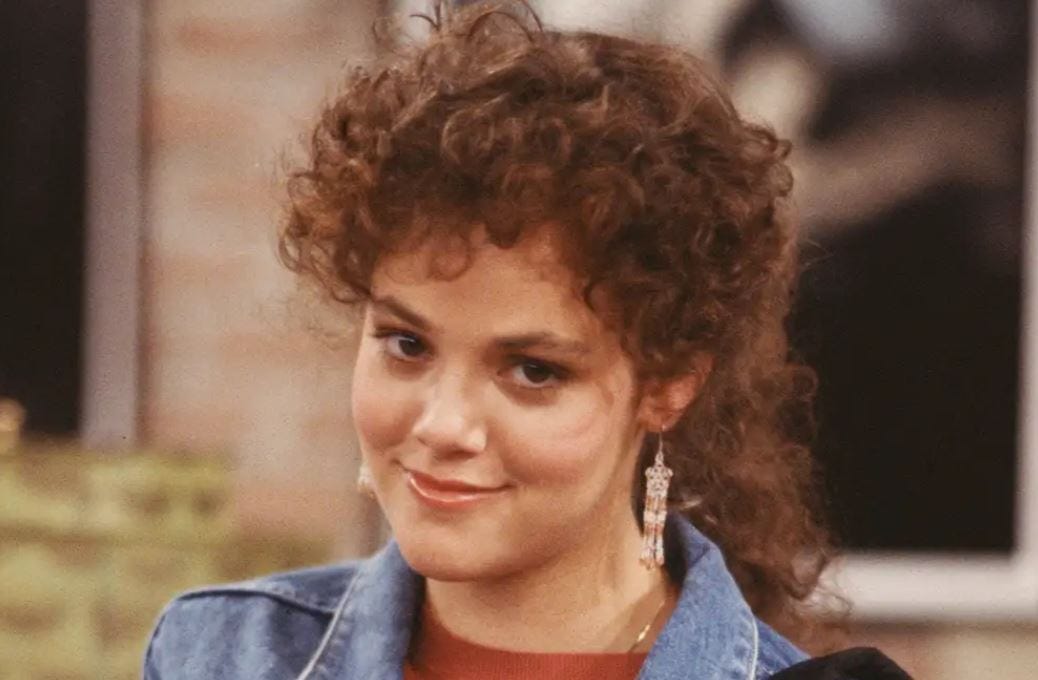
In 1987, I interviewed “My Sister Sam” actress Rebecca Schaeffer. We were both very young then — she was 19 at the time — and bonded over our mutual love of films, our favorite bands, and pop culture in general.
Two years later, I was covering her death. She had been shot and killed point blank by an obsessed fan, who showed up at her home.
Her murderer is currently serving a life sentence in California.
© 2026 JAE-HA KIM
DISTRIBUTED BY TRIBUNE CONTENT AGENCY, LLC.
2 thoughts on “Why Isn’t More Being Done to Stop the Stalking of Jung Kook?”