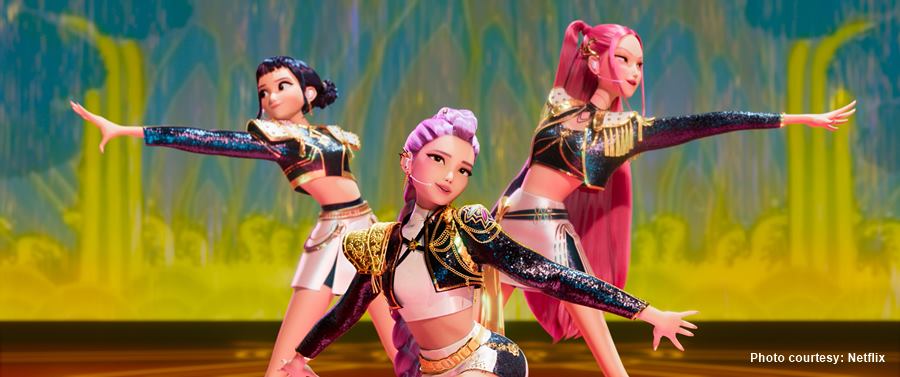
By Jae-Ha Kim
Substack (.pdf)
June 20, 2025
☆☆☆ (out of ☆☆☆☆)
Rumi (played by Arden Cho)
Jinu (played by Ahn Hyo-seop)
↑Note: Korean names denote the surname followed by the given name.
Based on the Koreans and Korean diaspora I have interviewed over the decades, as well as my own lived experience as an immigrant, I would say that most of us never dreamed of the day when Korean pop culture would be considered cool to anyone other than — well — us.
But here we are in 2025, where Korean entertainment is everywhere.

✔ BTS is the biggest pop group in the world.
✔ Bong Joon-ho’s 2019 film Parasite won four Academy Awards.
✔ The first season of “Squid Game” remains Netflix’s most-watched show of all time with 265.2 million views.
✔ And a report by Ampere Analysis showed that K-dramas and Korean films represent 17% of Netflix’s top 500 non-U.S. shows, besting content from the United Kingdom and Japan.
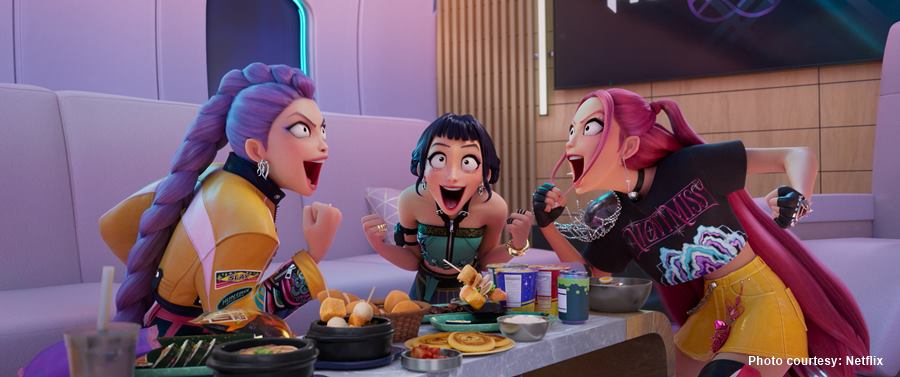
To be clear, the animated KPop Demon Hunters is an American film. But it’s what I refer to as Korean adjacent, incorporating Korean traditions and pop culture references into a super fun, but also surprisingly touching movie about a girl group trying to save the world from demons, who are everywhere — even on a chartered flight disguised as flight attendants.

The voiceover at the beginning of the film tells viewers all that we’ll need to know: “The world will know you as pop stars, but you will be much more than that. You will be Hunters,” who slay soul-stealing demons. As for the demons? Their primary concern is to feed the souls to their nefarious King Gwi-ma.
Since the beginning of time, Hunters were always a trio of young women whose “music ignites the soul and brings people together.” It was the first Hunters who created the Honmoon, a shield that protects the world from demons.
If you’re thinking that this rings of “Buffy the Vampire Slayer” (the series, not the abysmal film), I would agree with you. But KPop Demon Hunters is so much more. It takes the existing premise of a girl saving the world, mixes it up with Korean culture, and adds a soundtrack that is really, really good.
Huntr/x — comprised of leader Rumi, visual Mira and cutie pie rapper Zoey — are good and I can totally buy that they are the BlackpinkTwiceAespaBabyMonsterItzyIve of their girls’ generation.
I am someone who usually scoffs at how cringey fictional pop/rock bands are on TV and in films. The fake group’s songs almost always ring hollow for me. But here, most of the music is pitch perfect, thanks to artists like former SM trainee EJae and Kevin Woo, who used to be in the K-pop boy band U-KISS.

The filmmakers even recruited Jihyo, Jeongyeon, and Chaeyoung from the K-pop supergroup TWICE to sing “Takedown” (TWICE version) over the closing credits. (Notably, the real-life pop stars are the only ones to be shown on screen in non-animated form.)
Things are going swimmingly for Huntr/x, until they meet a hot boy band called the Saja Boys, who are styled within an inch of their lives.
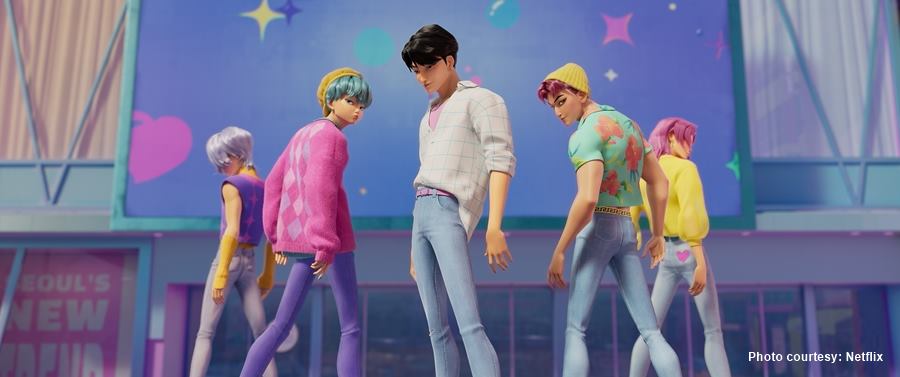
In Korean, saja/사자 is the word for lion. And one could infer that the group name was selected to represent a pride of strong, talented young men. But it’s not too long before the girls discover that the boys are, gasp, demons whose true selves look like more sinister.

K-drama fans will recognize what it means when a being is dressed like this: he’s a 저승사자/jeoseung-saja, or a grim reaper. (저승 refers to the other world.)
With inclusions like this, the creatives behind this film demonstrated that they not only knew what they were doing in telling a compelling story, but that they wanted this American film to resonate with Korean viewers as well — because most non-Koreans won’t understand the tie between Saja Boys and jeoseung-saja.
Within days of their debut, the Saja Boys have become Huntr/x’s biggest competition, both as K-pop stars and in their fight to destroy and protect the Honmoon, respectively. After all, what easier prey is there than stealing the souls of K-pop fans? At least that’s what the Saja Boys are counting on.
But in a nod to the para-social relationships that K-pop idols have with their fandom, Huntr/x makes it clear their fans are not going anywhere.
“You think we’re just going to let you steal our fans?” Rumi challenges. “You’re going to have to fight us for them.”
(Maybe this is what bickering fandoms should do, too, instead of hiding behind anonymous accounts to be harass each other on social media.)
“You’re just my type,” Zoey says as she confronts a handsome Saja Boy. “Oh well.” And then she annihilates him, because cute idols are temporary, but girl power and friendship is forever.
Near the end of the film, Huntr/x sings, “Why did we cover up the colors stuck inside our head / Get up and let the jagged edges meet the light instead / Show me what’s underneath / I’ll find your harmony / fearless and undefined / This is what it sounds like.”
For Huntr/x, the Saja Boys were always a wild and dangerous distraction. Their happiness lies within themselves, the friendship they share, and the art that they create together. But the secret that one of them withholds is what could destroy them.
While KPop Demon Hunters could’ve been a cutesy story about a boy-crazy girl group flirting with a boy band, there is a strong subtext here with a profound message. The secrets that we keep and the lies that we tell may have started off innocently enough. But they ultimately lead to our downfall unless we deal with the truth.
Release date: The 95-minute film released on Netflix today (June 20, 2025).
Trivia: There’s a meta moment when Rumi sees Jinu for the first time. The song that plays as the two lock eyes is “Love, Maybe,” the theme song from “Business Proposal” — which starred Ahn Hyo-seop as the male lead. It was a nice moment that made it clear that the filmmakers were very familiar with Korean entertainment.
© 2025 JAE-HA KIM | All Rights Reserved
One thought on ““KPop Demon Hunters””