Does Racist Vintage Art Get a Pass?

This is how stereotypes work. Westerners have depicted Asian men as being effeminate since forever.
Journalist, Author & Syndicated Columnist
This is how stereotypes work. Westerners have depicted Asian men as being effeminate since forever.

NPR’s Ayesha Rascoe speaks to syndicated columnist Jae-Ha Kim about the scandal that led to the death of beloved South Korean actor Lee Sun-Kyun. Note: This conversation has mentions of self-harm.
I was the first guest of 2024 on Phil Yu and Jeff Yang’s podcast, “They Call Us Bruce.” We discussed K-dramas, BTS, Lee Sun-kyun’s tragic death and how annoying it is when non-Asian members of the media co-opt our stories.

Following Lee Sun-kyun’s death, you are going to read a lot on social media and in newspapers about how South Korea has the highest overall suicide rate of all countries. And while someone will surely write a think piece about South Koreans being predisposed to dying by suicide, it’s important to remember how South Korea came to be an economic powerhouse and how its citizens’ well being was secondary to the country’s greatness.

A reminder that it’s really gross to tell people that their identity is determined by what language they speak — or what language they choose to sing in. Part 2 of my coverage of that problematic NYT K-pop podcast.

The thesis of the New York Times’ podcast questions whether K-pop is still K-pop if sung in English. It also questions whether Korean artists should even be singing in English, since there are so many Western artists who already sing in, you know, English…

She saw me as a dark-skinned minority, like herself. Aligning herself to me wouldn’t help her step up in social status. To her — and probably to many people — I was just another immigrant working in a factory, and that’s all that I would ever be. To her, she saw no value in me. Maybe my ethnic otherness reminded her too much of herself.

I’m not an influencer by any means and I’m not a celebrity. But I have dealt with trolls, starting from the days when they had to mail their vitriol through the USPS — all the way through present day, when haters can harangue you nonstop on social media.
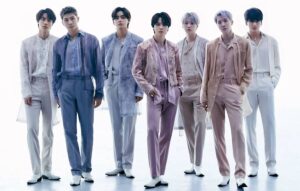
In this essay, writer Jae-Ha Kim celebrates BTS’s 10th anniversary as a group by looking at the dreams they achieved on behalf of the Korean diaspora. They rose to the top and took us with them.

Last week I wrote an article about an incident that occurred to my family when we were new immigrants in the United States. Who knew that such an innocuous essay would stir up the emotions of haters, who deemed us as getting what we deserved for deciding to move here. Of course, they all tapped away anonymously on their keyboards from their homes in the … United States.

To them it may have been smelly and weird. To us, it was a taste of home.

Back in my era, the teachers encouraged immigrants to only speak English at home so that we wouldn’t fall behind. But what they didn’t know at the time — or perhaps they didn’t really care about — was that in the rush to make us understand English, many of us lost our ability to converse in our birth language.

To many misguided editors, one Asian is enough. Two Asians is overkill. Three Asians will get you called in to the office to be reprimanded. And also… Epik High is not a boy band. But they wouldn’t know that, would they?

In an unusual cinematic coincidence, two critically acclaimed films about South Korean adoption were released in December depicting different sides of the adoption story. Broker focuses on a teenage girl who leaves her infant at a church’s safe haven baby box, while Return to Seoul tells the story of a French woman who reunites with her birth family just days after arriving in Korea. To better understand how these films speak to real-life adoptees, I talked to Korean academics, human rights experts, and adoptees. My reported piece for MASHABLE.

A year ago, Tablo wasn’t sure there would be another Epik High album. Now the Korean hip-hop star is ready to talk about it all — from their new EP, ‘Strawberry,’ to the trauma he faced from an online troll campaign, to his next collaboration with BTS’ RM. My exclusive interview for Rolling Stone.

BTS’ Kim Seok-jin announced today that he is preparing to enlist in the Korean military, which is required of all able-bodied Korean males. There are exceptions for athletes, classical musicians, and some academics. So why didn’t the Korean government exempt BTS, whose global achievements are unparalleled?

I loved “Extraordinary Attorney Woo.” The storylines were compelling and the actors did a fine job in bringing their characters to life. Park Eun-bin has been singled out for her extraordinary portrayal of a highly-functioning autistic attorney. But that’s where my conflict lies. As many autistic people have already pointed out, as good as Park was in her role, it is unsettling to watch a non-disabled actor portray a character who is on the spectrum. Most of my friends and acquaintances who have autistic children said they couldn’t force themselves to watch beyond the first episode, because her portrayal felt like a mockery of what they live through.

May is Asian American and Pacific Islander Heritage Month. Coincidentally, it’s also Mental Health Awareness Month. And while the latter designation draws attention to the benefits of taking care of our overall well being, mental health care traditionally has been overlooked by Asians – a mindset that experts say has trickled down to Asian Americans.

Had Tablo not experienced the alienation and toxicity of TaJinYo, Tablo’s music – and therefore Epik High’s, too – most likely would not have resulted in “Epik High Is Here 下 (Part 2).” From all those lies, truth survived.

Combatting racism isn’t accomplished by whoever makes the first social media post or writes the first article. It’s a lifelong commitment that focuses on the victims —all of them — and not just one specific group that you happen to favor.